 Digital Team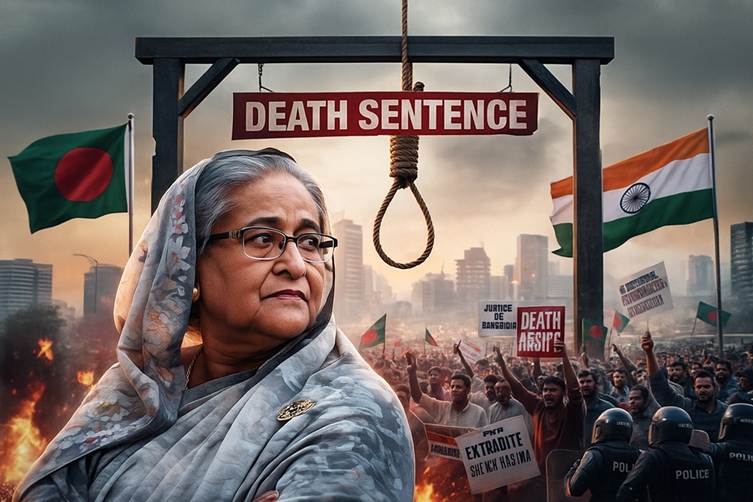
Bangladesh extradition, Sheikh Hasina death sentence, and the Muhammad Yunus interim government have become major geopolitical flashpoints in South Asia. Bangladesh’s caretaker administration has sent an official extradition request to India, seeking the return of the ousted Prime Minister Sheikh Hasina after her controversial judgment by the International Crimes Tribunal (ICT-BD). The decision has triggered escalation in Bangladesh politics, fueling accusations of political vendetta, regime change, and judicial abuse.
Critics and observers argue that the death sentence for Sheikh Hasina reflects a politically motivated verdict rather than a fair judicial process. The interim government has allegedly attempted to legitimize the verdict through street mobilization, anti-Hasina protests, and media propaganda, aiming to strengthen its legitimacy domestically and internationally.
India’s Position: Human Rights, Regional Stability, and Strategic Policy
New Delhi has adopted a cautious and strategic approach. India’s foreign policy emphasizes:
- Human rights
- Regional peace
- Trust with democratic allies
- National security
In the context of the India–Bangladesh extradition treaty, requests driven by political persecution or regime pressure can legally be rejected. India views the Hasina case through the lens of political motivation, lack of judicial fairness, and national security considerations.
Diplomatic sources indicate that India will not respond to an extradition request influenced by:
- mob politics
- street pressure
- unstable caretaker governance
- anti-India sentiment
Thus, India’s stance aligns with safeguarding regional stability, bilateral relations, and justice principles, while resisting coercive tactics from the Bangladesh interim government.
Domestic Crisis in Bangladesh: Election Delays and Anti-India Strategy
Following Sheikh Hasina’s resignation, the interim authorities promised free elections, democratic reforms, and economic revival. None of these objectives have materialized. The country faces:
- rising unemployment
- export collapse
- declining infrastructure
- economic mismanagement
Policy analysts argue that Muhammad Yunus’s administration is leveraging anti-India narratives, street protests, and ICT-BD legal theatrics to divert attention from internal failures. The push to label Hasina as a criminal appears to be part of a broader playbook of political survival, crisis distraction, and power consolidation.
Geopolitical Risks: Security Concerns and Extremist Networks
India’s concerns extend beyond diplomacy. The potential rise of:
- Rohingya-linked militancy
- Islamist radicalization
- cross-border terrorism
- Pakistan-backed jihadi networks
has created national security alarm. Dhaka’s alleged tolerance of extremist groups and irresponsible engagement with foreign intelligence proxies threatens the stability of the region. Any escalation from the Bangladesh side—whether economic, ideological, or militant—could transform into a borderline conflict, directly impacting Indo-Bangladesh relations.
The Road Ahead
The political project of executing Sheikh Hasina is unlikely to gain international legitimacy. India will not extradite an ally into a politically charged tribunal, particularly when the sentencing process shows signs of revenge politics, democratic breakdown, and foreign influence operations. Bangladesh cannot expect cooperation while cultivating anti-India hostility, destabilizing narratives, and terror-linked factions.
India’s position remains firm: it does not surrender partners to mob justice, it defends human rights, and it rejects the manipulation of legal institutions for regime security.
The Sheikh Hasina extradition crisis is not just a bilateral legal issue—it has now become a litmus test of South Asian geopolitics, democracy, and the future of India–Bangladesh relations.