 Digital Team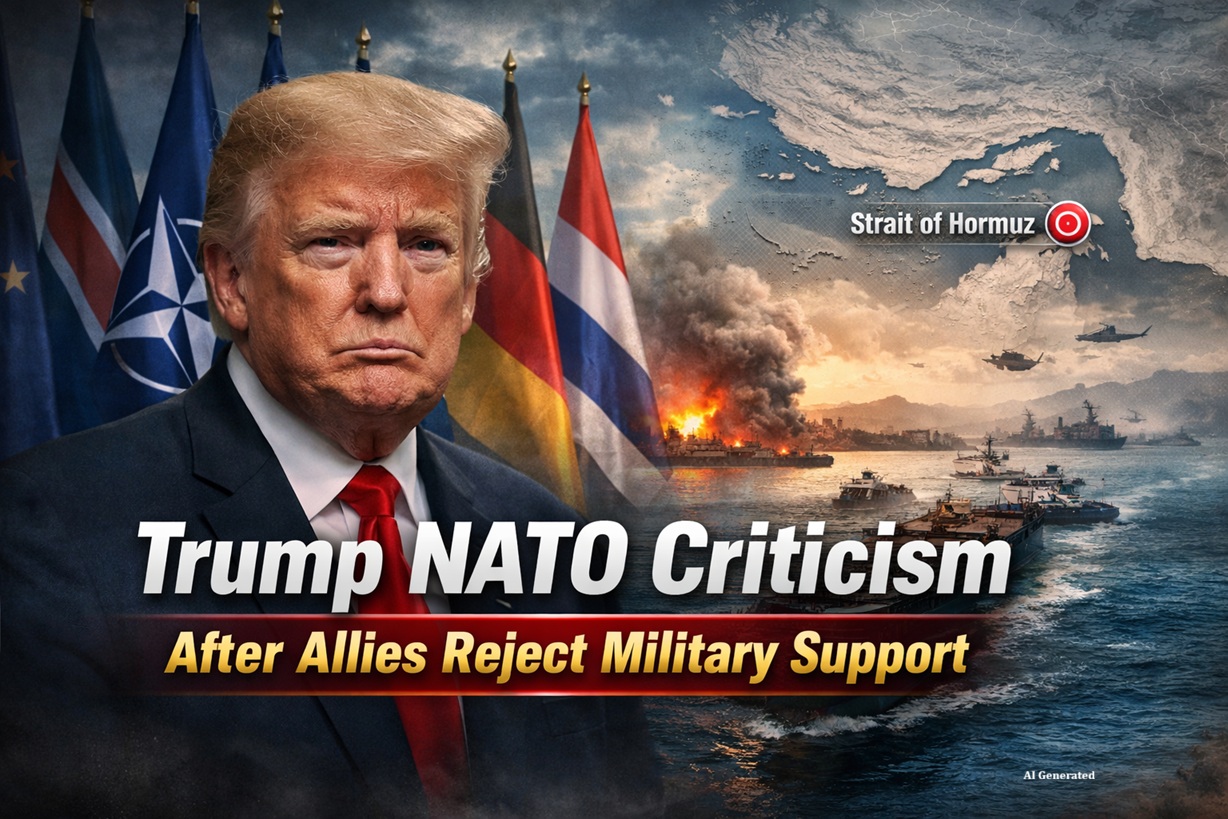
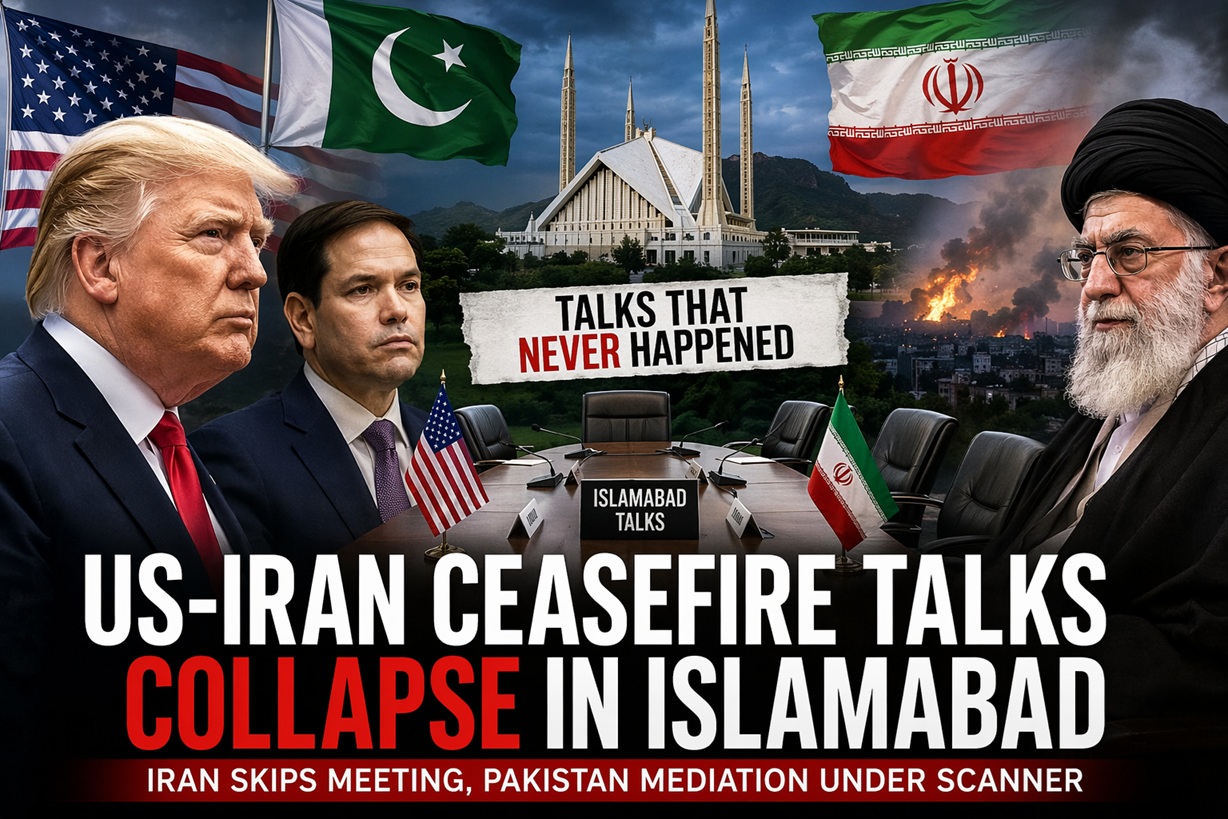
Former US President Donald Trump lashes out at NATO allies over refusal to back military action in Strait of Hormuz, exposing cracks in Western alliance strategy.
Trump NATO criticism has escalated sharply after former US President Donald Trump branded NATO allies as “cowards” and “paper tigers” for refusing to support proposed military operations in the Strait of Hormuz. The remarks come amid rising tensions in the Middle East, where concerns over maritime security, oil supply disruptions, and potential military escalation continue to dominate global discourse.
Trump NATO Criticism Deepens Alliance Divide
The latest Trump NATO criticism highlights growing fissures within Western alliances, particularly over burden-sharing and military strategy. Trump’s comments, made on his social platform, follow European nations’ reluctance to deploy naval forces in a volatile conflict zone.
Diplomatic sources indicate that several NATO members were unconvinced about the clarity and objectives of the proposed operation. Leaders across Europe reportedly questioned the absence of a defined exit strategy and broader multilateral consensus.
European Leaders Push Back
France and Germany emerged as key voices of caution. French leadership reportedly warned against being drawn into “another American-led intervention,” while German officials expressed concerns over risking naval assets in what they viewed as an unclear mission.
This divergence underscores a broader shift: NATO allies are increasingly asserting independent strategic priorities rather than aligning automatically with Washington.
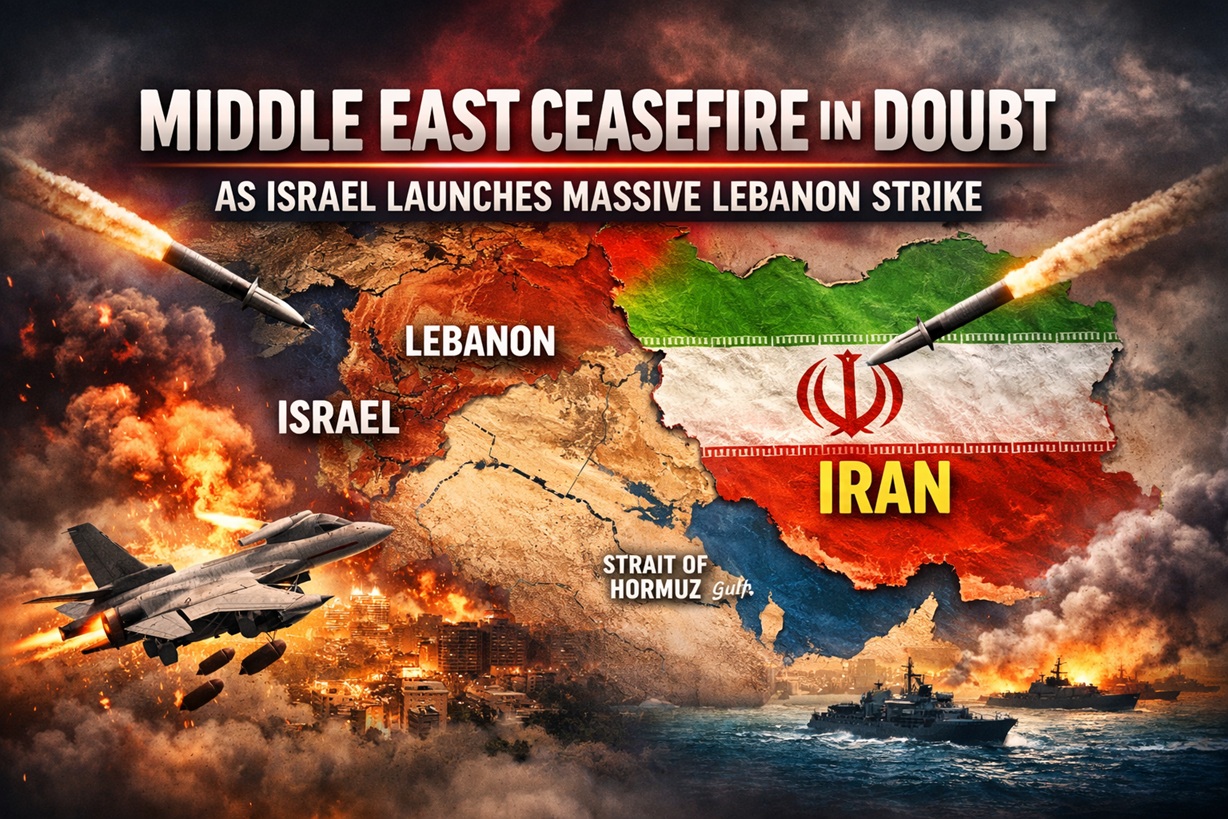
Why the Strait of Hormuz Matters Globally
The Strait of Hormuz remains one of the world’s most critical energy chokepoints.
Key Facts: Strait of Hormuz
| Parameter | Details |
| Global Oil Flow | ~20% of world supply |
| Narrowest Width | 21 miles |
| Shipping Lanes | ~2 miles each direction |
Any disruption here can trigger immediate global economic consequences, including oil price spikes and supply chain instability.
Maritime experts point out that defending the strait is inherently difficult due to its narrow geography and vulnerability to asymmetric threats such as missile systems and fast attack vessels.
Iran Strategy and Rising Tensions
Iran’s approach in the region reflects a blend of military capability and psychological strategy.
Missile Demonstrations and Messaging
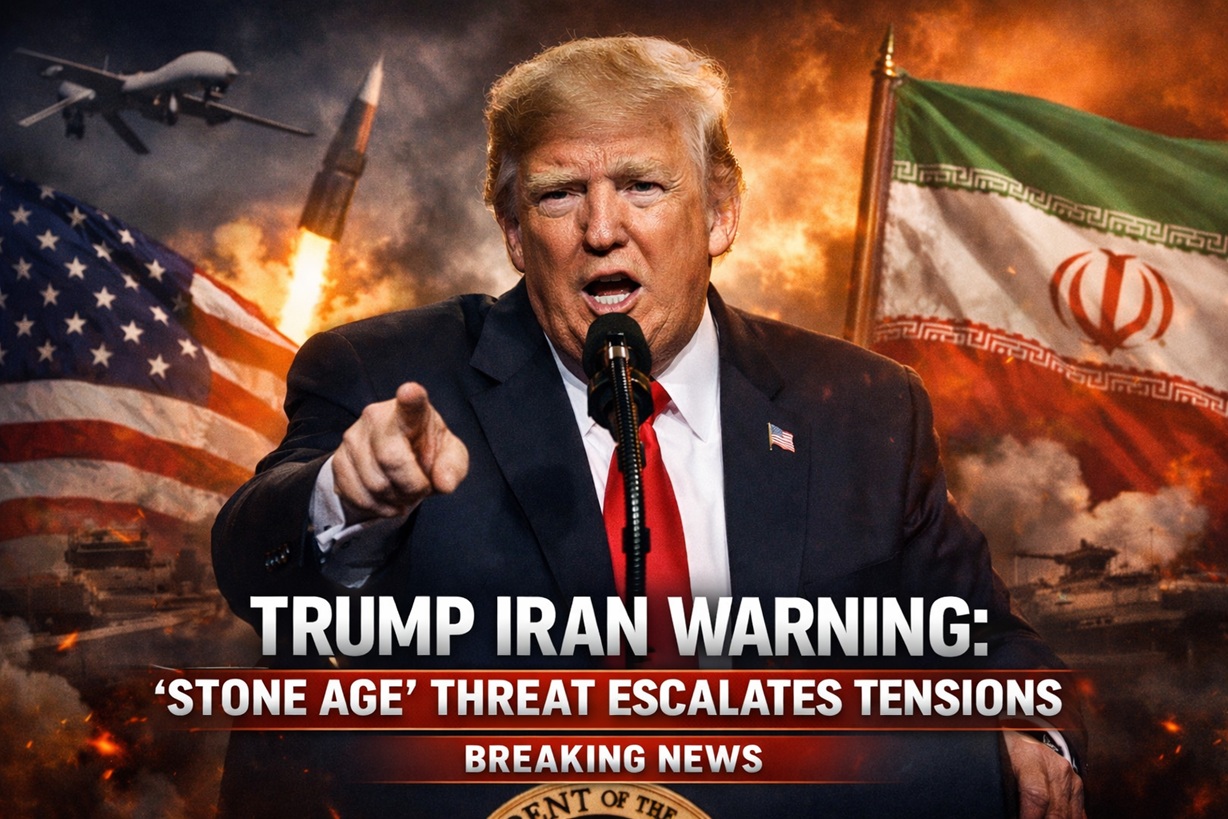
Recent missile tests capable of reaching long distances signal Iran’s intent to project power beyond its immediate region. Analysts interpret these moves as deterrence tactics aimed at both the US and its allies.
Additionally, Iran has raised alarms about potential nuclear escalation, claiming that strikes on its facilities could trigger broader consequences. While such claims remain contested, they add to the complexity of diplomatic engagement.
Trump NATO Criticism: Strategic or Political?
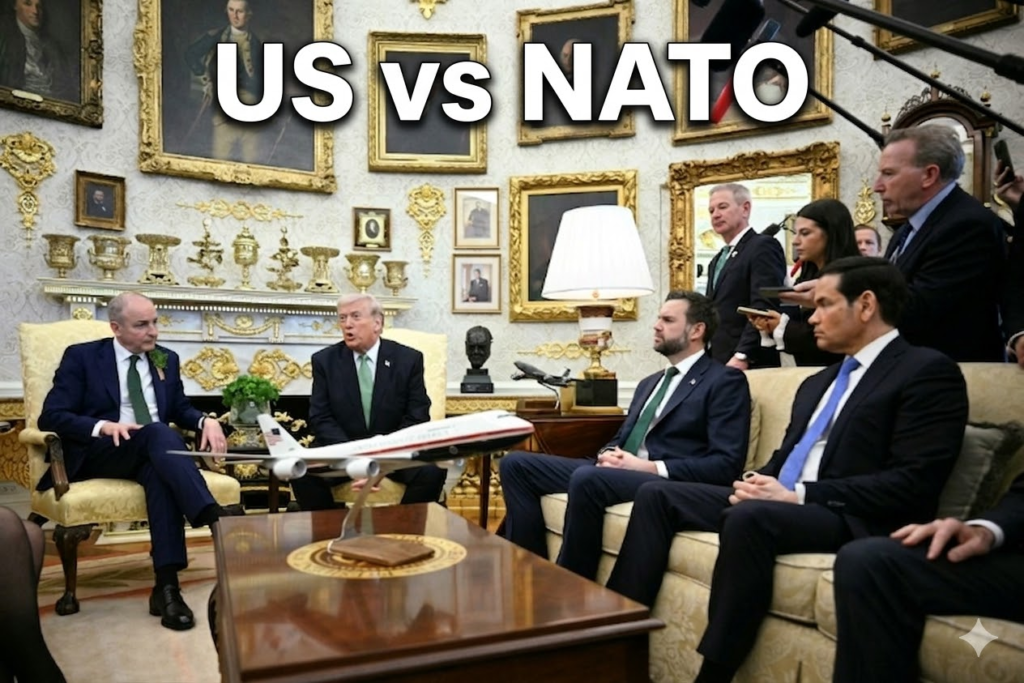
Trump’s stance reflects his long-standing view that NATO allies should contribute more actively to global security efforts.
However, critics argue that the Trump NATO criticism overlooks legitimate concerns raised by allies:
- Lack of clear operational objectives
- Absence of multilateral consultation
- Legal and diplomatic uncertainties
- Risk of escalation without exit strategy
This difference in approach highlights a fundamental debate over how modern alliances should function.
Economic Pressures Add to Crisis
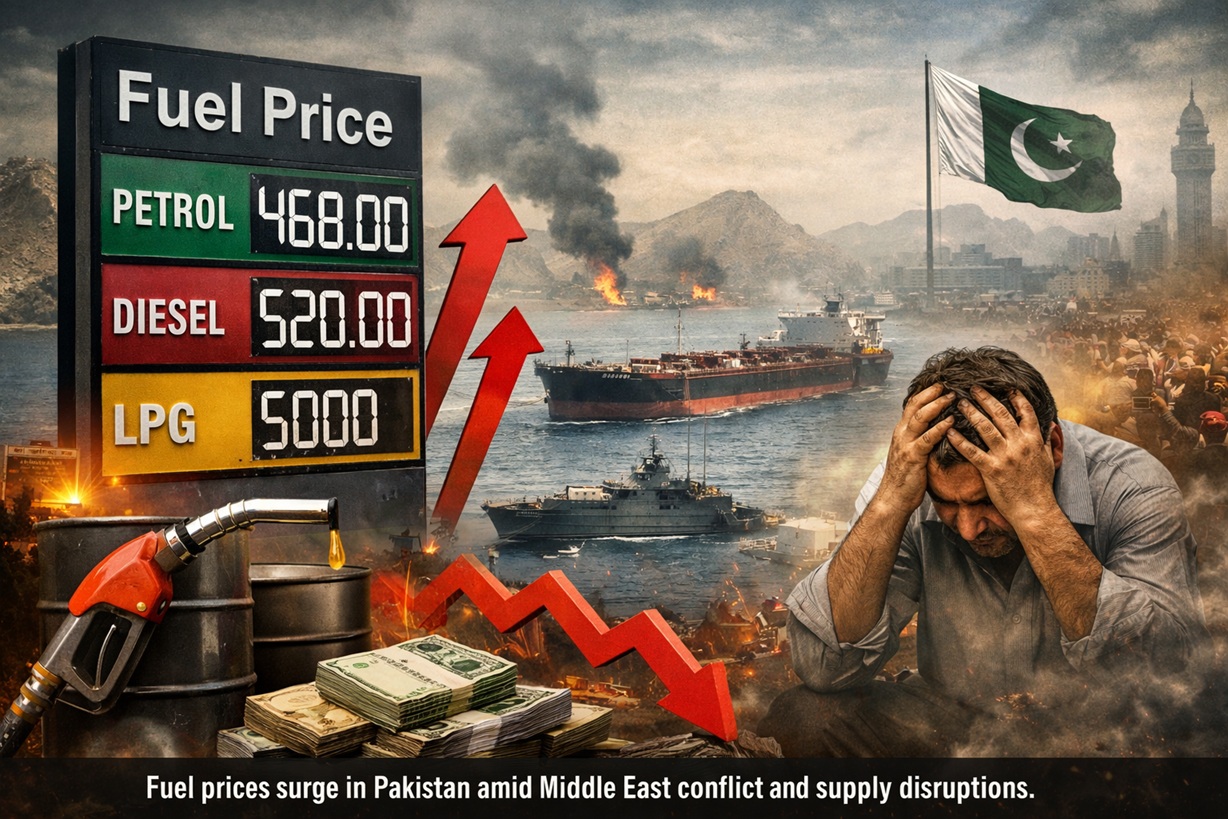
The geopolitical tensions are also impacting global and domestic economies.
Key Economic Developments
- Rising fuel prices in the US
- Temporary easing of sanctions on Iranian oil
- Increased oil procurement strategies by countries like India
Economic experts warn that prolonged instability in the Strait of Hormuz could have cascading effects on global inflation and trade.
Fragmented Western Strategy Benefits Rivals
The lack of unified action among NATO allies may inadvertently benefit adversaries.
Countries like Iran, Russia, and China are seen as leveraging divisions within Western alliances to strengthen their strategic positions.
Meanwhile, regional players continue to pursue independent strategies, further complicating coordination among Western powers.
The Bigger Picture: Changing Global Power Dynamics
The ongoing crisis reflects a broader transformation in global geopolitics.
Key Trends
- Shift from unipolar to multipolar world
- Increased autonomy among US allies
- Rise of asymmetric warfare strategies
- Growing importance of economic leverage
The Trump NATO criticism becomes symbolic of this transition, where traditional alliance structures are being tested by evolving geopolitical realities.
Conclusion: What Lies Ahead
As tensions persist, the Trump NATO criticism underscores a critical question: can traditional alliances adapt to modern geopolitical challenges?
The situation in the Strait of Hormuz will likely remain a flashpoint, with implications for global security, energy markets, and diplomatic relations. Moving forward, greater coordination, clearer strategies, and balanced diplomacy may be essential to prevent further escalation.
FAQ
Q: Why did Trump criticize NATO allies?
A: Trump criticised NATO for refusing to support military operations in the Strait of Hormuz.
Q: Why is the Strait of Hormuz important?
A: It carries about 20% of global oil supply, making it a critical energy route.
Q: Did NATO reject military involvement completely?
A: Allies expressed concerns over strategy and risks, leading to reluctance rather than outright rejection.
Q: How does this impact global oil prices?
A: Any instability in the region can lead to significant price volatility.
Q: What are the broader implications of this conflict?
A: It reflects shifting global power dynamics and challenges to traditional alliances.
References
- DW (Deutsche Welle): Covers Trump labeling NATO allies “cowards” after European leaders declined naval forces for Hormuz security.
Direct link: https://www.dw.com/en/iran-war-trump-lashes-out-at-nato-over-lack-of-hormuz-help/live-76442983 - Euronews: Quotes Trump’s post calling allies “cowards” for refusing to help open the Strait, warning NATO is a “paper tiger” without US support.
Direct link: https://www.euronews.com/2026/03/20/israel-strikes-tehran-as-iran-continues-targeting-energy-infrastructure-across-gulf - ABC News (Australia): Trump lashes out at NATO “cowards” as US prepares more troops amid Hormuz issues.
- https://www.abc.net.au/news/2026-03-21/trump-sends-more-troops-to-iran/106481354
- Al Jazeera: “‘Cowards’: Trump slams NATO over lack of support in US–Israel war on Iran.”
https://www.aljazeera.com/news/2026/3/20/cowards-trump-slams-nato-over-lack-of-support-in-us-israel-war-on - NDTV: Trump calls allies “cowards,” says NATO is “paper tiger without US” in Hormuz context.
https://www.ndtv.com/world-news/iran-war-live-news-cowards-well-remember-trump-slams-nato-allies-for-not-joining-iran-war-112440