 Digital Team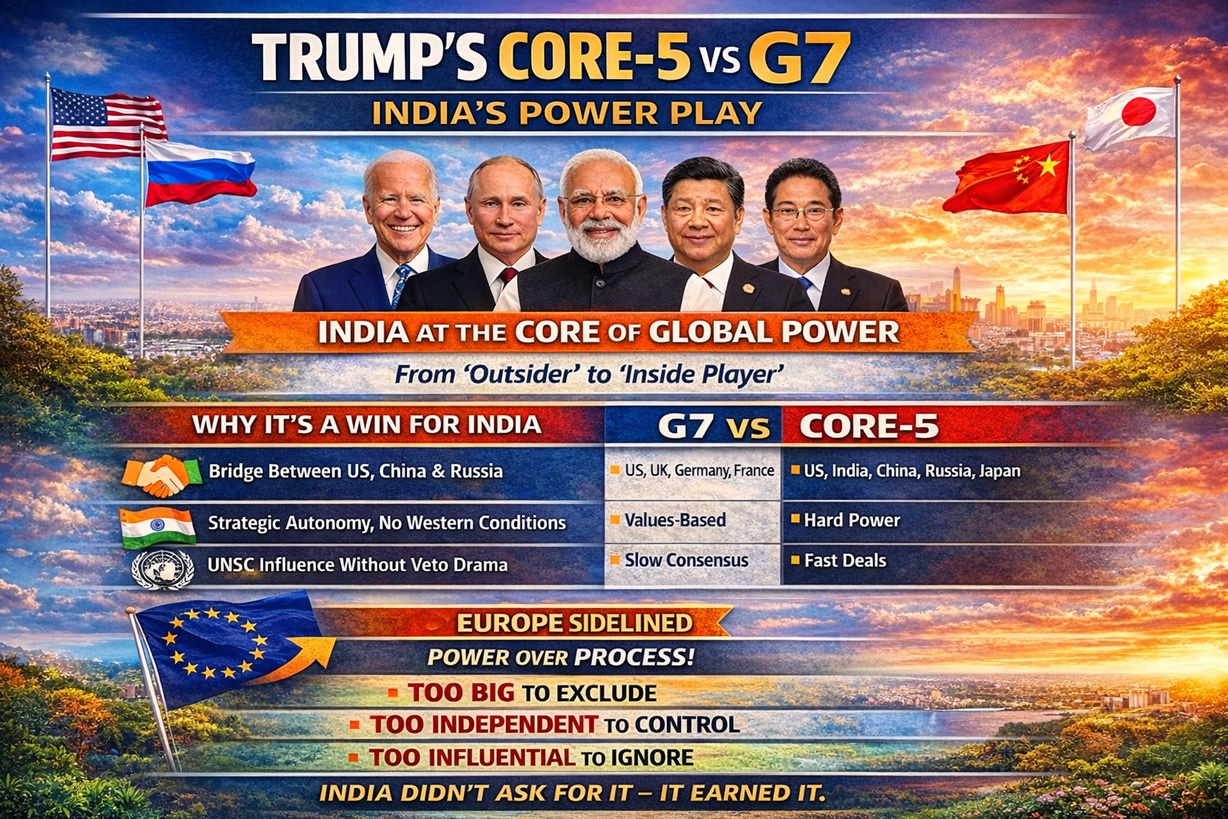
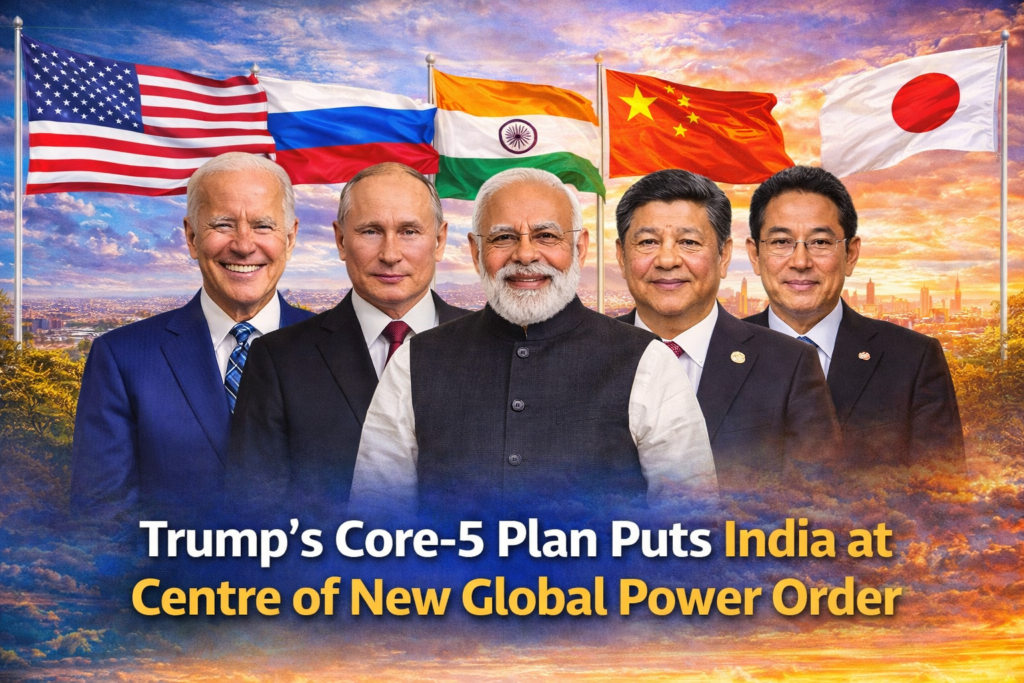
Trump Core-5 plan signals a dramatic shift in the global power structure, placing India alongside the United States, China, Russia and Japan in a proposed elite decision-making group that could challenge the relevance of the G7 and existing multilateral institutions.
According to Defense One, the unpublished version of the strategy explicitly argues that traditional American hegemony is neither desirable nor achievable in a multipolar world, calling existing institutions “ill-suited” to today’s geopolitical realities.
The Trump Core-5 plan, still unofficial, envisions regular summits among the five nations to resolve global flashpoints, beginning with the Middle East and the normalisation of Israel–Saudi Arabia relations.
Why the G7 Is Being Reconsidered
Failure of Existing Global Institutions
The draft strategy reportedly criticises the G7, G20 and UN Security Council for being slow, divided and ineffective during major crises such as:
- Ukraine–Russia war
- Israel–Iran tensions
- Saudi Arabia–Iran rivalry
- Trade and technology conflicts involving China
A senior US official quoted anonymously by Politico said:
“There were certainly conversations that bodies like the G-structure and the UN Security Council were no longer fit for purpose.”
Trump had earlier called Russia’s expulsion from the G8 a “strategic mistake” and even floated the idea of including China, signalling his preference for hard-power realism over value-based alliances.
India’s Elevation Under the Trump Core-5 Plan
Why India Matters
India’s inclusion in the Trump Core-5 plan marks a decisive shift in global power recognition. Unlike the G7—dominated by Western economies—the Core-5 reflects:
- India’s economic scale and demographic weight
- Strategic autonomy and multi-alignment
- Military capability and Indo-Pacific influence
- Growing role as a bridge between rival power blocs
Comparison Table: G7 vs Core-5
| Parameter | G7 | Core-5 (Proposed) |
| Members | US, UK, France, Germany, Italy, Japan, Canada | US, India, China, Russia, Japan |
| Nature | Values-based (liberal democracies) | Power-based (hard influence) |
| India’s Role | Invitee / Outreach partner | Founding member |
| China & Russia | Excluded | Central participants |
| Decision-making | Consensus-heavy, slow | Leader-driven, fast |
| Global Representation | Western-heavy | Truly multipolar |
| Crisis Resolution | Statements & sanctions | Negotiation & deal-making |
| Relevance in Wars | Limited | Direct influence |
| Future Outlook | Declining relevance | Rising strategic importance |
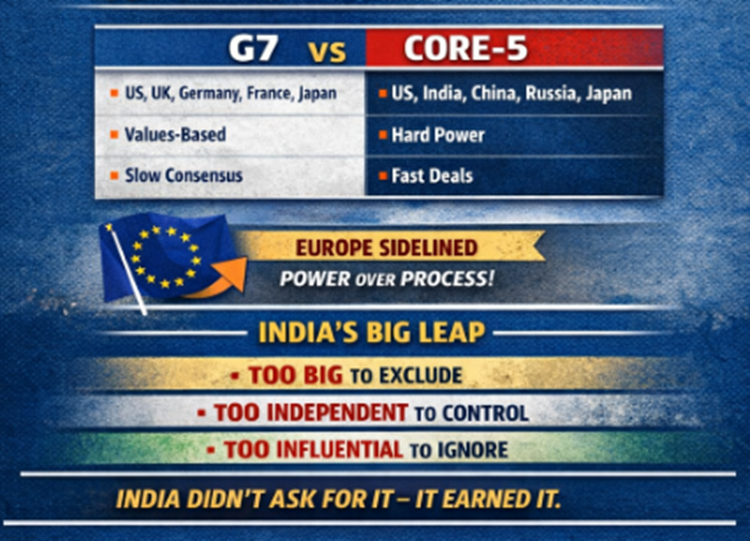
For New Delhi, this represents de facto recognition of India as a global power equal, without the prolonged reform debates surrounding permanent UN Security Council membership.
Modi–Trump Phone Call: More Than Trade Talks
Just days before the reports surfaced, Prime Minister Narendra Modi and Donald Trump held a phone conversation officially described as focusing on:
- Tariffs and trade facilitation
- Defence manufacturing
- Critical technology transfers
However, Washington insiders now suggest the conversation was part of a broader strategic recalibration, aligning with Trump’s vision of restructuring global governance through smaller, power-centric coalitions.
What the Leaked Strategy Document Reveals
Key Proposals from the Unpublished NSS
- Formation of Core-5 (C5): US, India, China, Russia, Japan
- Regular leader-level summits with issue-based agendas
- First focus area: Middle East stabilisation
- Rejection of ideological alliances in favour of influence-based diplomacy
Defense One described the document as outlining “a plan for shedding old relationships and creating new ones.”
Politico Confirms White House Deliberations
Politico, known for its deep White House access, corroborated the existence of these discussions, calling the idea “far-out but not shocking.”
A former Trump administration official told the publication:
“Nothing around a C5 is completely surprising. There’s long been frustration that current global institutions don’t reflect real power dynamics.”
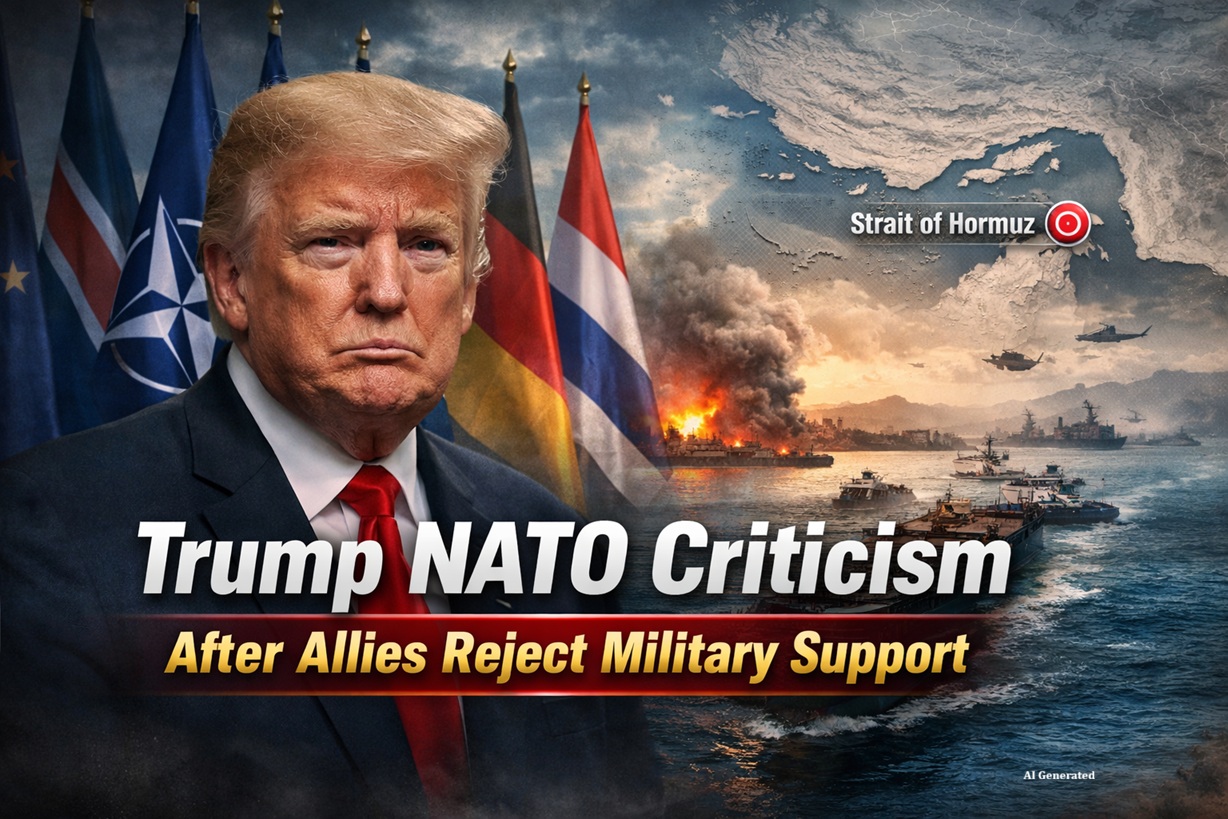
Europe on the Sidelines, NATO at Risk?
One of the most striking implications of the Trump Core-5 plan is the marginalisation of Europe. Traditional US allies—Germany, France and the UK—are notably absent.
Trump has repeatedly argued that:
- Europe must take greater responsibility for its security
- NATO places disproportionate burdens on the US
- Crisis resolution requires engaging adversaries, not excluding them
This approach risks fracturing NATO unity, even as it promises faster deal-making among major powers.
Realism Over Democracy: A Strategic Shift
The Core-5 concept abandons democracy-centric diplomacy in favour of pure geopolitical realism, bringing rivals like China and Russia into the same forum as the US and India.
Supporters argue this reflects the reality of a multipolar world, while critics warn it could legitimise authoritarian regimes and weaken rules-based order.
Will the Core-5 Replace the G7?
While officials stress that the Trump Core-5 plan remains at a conceptual stage, its emergence signals a deeper transformation in US foreign policy thinking.
If revived under a future Trump administration, the Core-5 could:
- Overshadow the G7
- Reduce relevance of the UN Security Council
- Institutionalise India’s rise as a global power
India’s Strategic Moment
The Trump Core-5 plan underscores a defining moment for India, marking its transition from a regional power to a central architect of the emerging global order. It places India at the heart of a proposed new global architecture, reflecting its growing economic, military and diplomatic weight. While the initiative remains unofficial, the fact that India features prominently in leaked US strategy documents underscores New Delhi’s evolving role as a decisive global actor. As the world navigates an increasingly fragmented order, India’s strategic autonomy may prove to be its greatest asset in shaping what comes next.
FAQs
Q1: What is the Trump Core-5 plan?
A proposed US strategy to create a five-nation power bloc including the US, India, China, Russia and Japan.
Q2: Why is India included in the Core-5?
India’s economic scale, strategic autonomy and Indo-Pacific influence make it central to global power balance.
Q3: Will the Core-5 replace the G7?
Not officially, but it could overshadow the G7 if institutionalised.
Q4: Is the Core-5 plan confirmed by the White House?
The idea appears in an unpublished US National Security Strategy but has not been formally adopted.
Q5: How does this affect NATO?
It may weaken NATO cohesion by sidelining European allies.
Also Read:
G20 Summit South Africa: A Strategic Setback for Donald Trump
References: