 Digital Team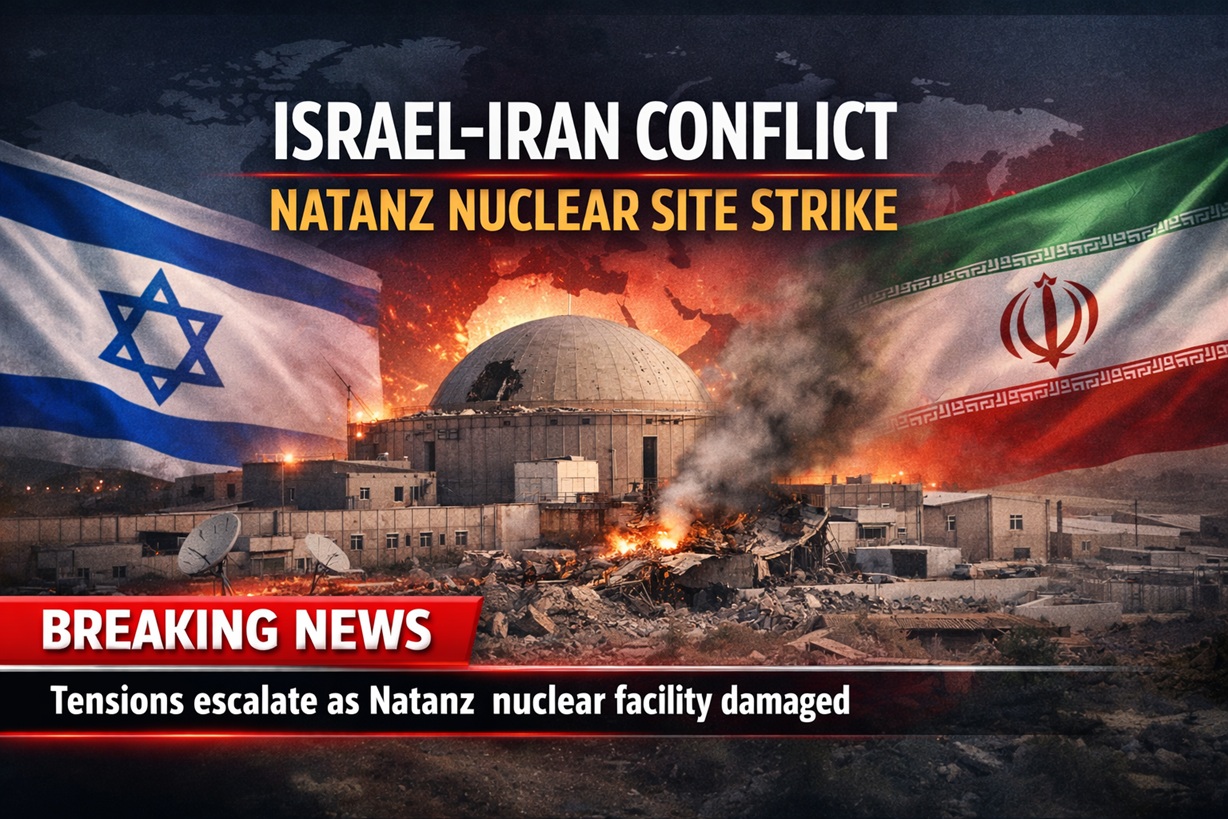
US-Israeli strikes damage Iran’s Natanz nuclear site; IAEA says no radiation risk as war enters Day 4
The Israel-Iran conflict intensifies after Prime Minister Benjamin Netanyahu confirms key operational details of the strike on Iran’s Natanz nuclear facility, even as the International Atomic Energy Agency (IAEA) reports no radiation leak. The joint US-Israeli airstrikes, carried out earlier this week, mark a major escalation in West Asia’s most volatile flashpoint.
According to the IAEA, the damage at the Natanz nuclear site is limited to entrance structures of the underground facility. “No radiological consequences are expected,” the UN watchdog said in a statement Tuesday, offering temporary relief amid fears of a nuclear disaster.
Israel-Iran Conflict: Natanz Nuclear Site Strike Confirmed
The Israel-Iran conflict entered a decisive phase after confirmation that the Natanz nuclear site—central to Iran’s uranium enrichment programme—was directly targeted.
The International Atomic Energy Agency said inspections show structural damage to access buildings but no impact on underground centrifuge halls.
Natanz remains a cornerstone of Iran’s nuclear ambitions. Western intelligence agencies have long alleged that the site could accelerate weapons-grade uranium enrichment if left unchecked.
What Netanyahu Revealed
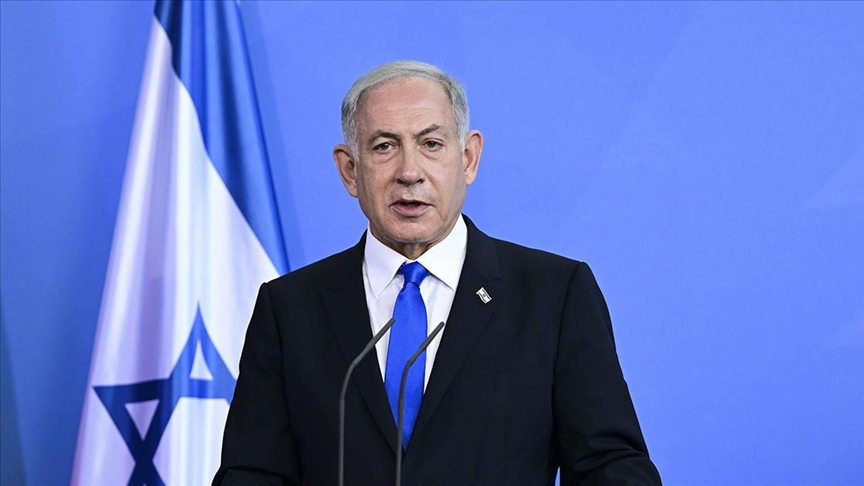
Speaking in Jerusalem, Benjamin Netanyahu stated that the strike aimed at “crippling Iran’s missile and nuclear command infrastructure.” He described the operation as “surgical and necessary.”
Israeli officials suggest the attack involved precision-guided munitions designed to avoid triggering radioactive fallout.
Trump Signals Prolonged Israel-Iran Conflict
US President Donald Trump signalled the Israel-Iran conflict may evolve into a prolonged campaign.
“The big wave hasn’t even happened yet,” Trump told reporters, adding that Washington’s objective is to “neutralise Iran’s missile and nuclear capabilities.”
While earlier remarks hinted at “regime change,” US officials now stress dismantling military infrastructure over political overthrow. British lawmakers reportedly questioned the legality of forced regime change, prompting a rhetorical shift.
Key US Objectives
- Destruction of missile launch systems
- Targeting nuclear enrichment facilities
- Establishing air superiority
- Preventing Iranian retaliation in Gulf states
Europe Divided as China Backs Iran
The geopolitical landscape is shifting rapidly in the Israel-Iran conflict.
Britain, France and Germany issued a joint statement backing “necessary defensive measures” while urging restraint. However, divisions persist within the European Union, with some leaders calling the strikes unilateral.
Meanwhile, Chinese Foreign Minister Wang Yi condemned the operation as a violation of international law. China confirmed evacuation of over 3,000 nationals from Iran, signalling concern over regional spillover.
Russia has offered diplomatic support but stopped short of military intervention.
Casualties Mount Inside Iran
Iranian state media report heavy military casualties, including senior Revolutionary Guard commanders. Independent verification remains limited.
A strike in Minab reportedly killed dozens of students at a girls’ school, escalating humanitarian concerns.
Tehran has imposed strict internal security measures following reports of leadership uncertainty. Authorities deny speculation surrounding Supreme Leader Ayatollah Ali Khamenei’s status.
Earthquake Sparks Speculation
A 4.3-magnitude earthquake in Iran has fuelled rumours of a possible underground nuclear detonation. Seismologists, however, attribute the tremor to natural tectonic activity.
No evidence currently links the quake to nuclear testing.
Strait of Hormuz Tensions Raise Global Oil Fears
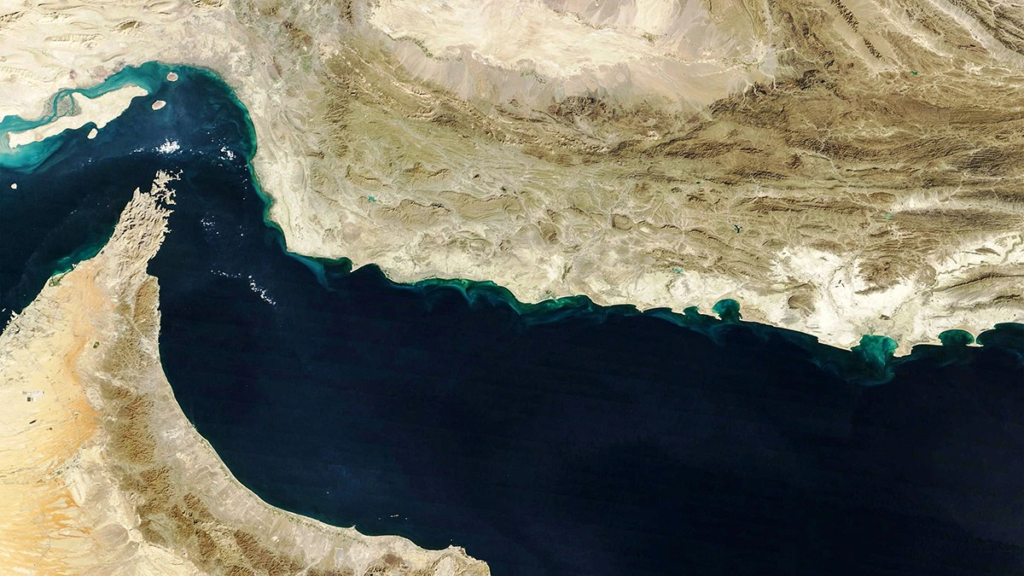
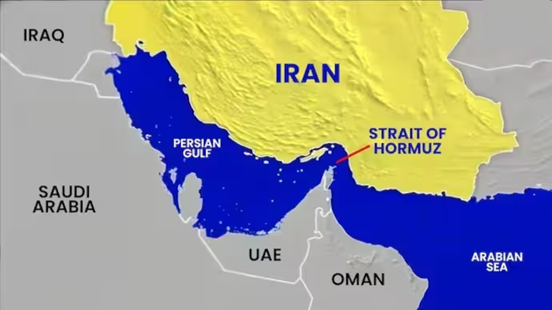
The Israel-Iran conflict threatens global energy markets. The Strait of Hormuz, through which nearly 20% of global oil passes, faces heightened security alerts.
Airspace closures across West Asia have disrupted international aviation. Brent crude prices climbed amid fears of supply chain disruption.
Iraqi paramilitary groups have warned of attacks on US bases, raising the spectre of a broader regional war.
India’s Strategic Balancing Act
India, with over 10 million nationals in West Asia, faces economic and security stakes.
New Delhi has called for restraint while prioritising the safety of Indian citizens and remittance flows. Officials are monitoring developments closely amid concerns over oil imports and diaspora security.
Day 4 Analysis: Asymmetrical War Emerges
Military analysts say the Israel-Iran conflict is becoming asymmetrical.
The US and Israel maintain air dominance, striking high-value Iranian targets with minimal resistance. Iran continues missile launches toward civilian and economic sites but struggles to counter advanced air defences.
Without direct military support from China or Russia, Iran’s strategic options appear constrained.
What Next in the Israel-Iran Conflict?
Diplomatic backchannels remain open, but escalation risks persist.
If strikes expand beyond nuclear infrastructure to broader state assets, the conflict could widen dramatically. The coming days will determine whether the Israel-Iran conflict stabilises into containment—or spirals into a prolonged regional war.
The Natanz strike underscores a critical reality: the nuclear dimension remains central to this confrontation. As global powers recalibrate their positions, the trajectory of the Israel-Iran conflict will shape West Asia’s security architecture for years to come.
FAQs on Israel-Iran Conflict
Q: What happened at Iran’s Natanz nuclear site?
A: US-Israeli airstrikes damaged entrance structures; the IAEA reports no radiation leak.
Q: Is there a nuclear radiation risk?
A: The IAEA confirms no radiological consequences are expected.
Q: Why did Israel attack Natanz?
A: Officials say the aim is to neutralise Iran’s nuclear and missile capabilities.
Q: Is China supporting Iran militarily?
A: China has offered diplomatic backing but no confirmed military assistance.
Q: Could oil prices rise due to the conflict?
A: Yes. Tensions near the Strait of Hormuz threaten global oil supply routes.
References
https://news.un.org/en/story/2026/03/1167070
https://www.reuters.com/world/middle-east