 Digital Team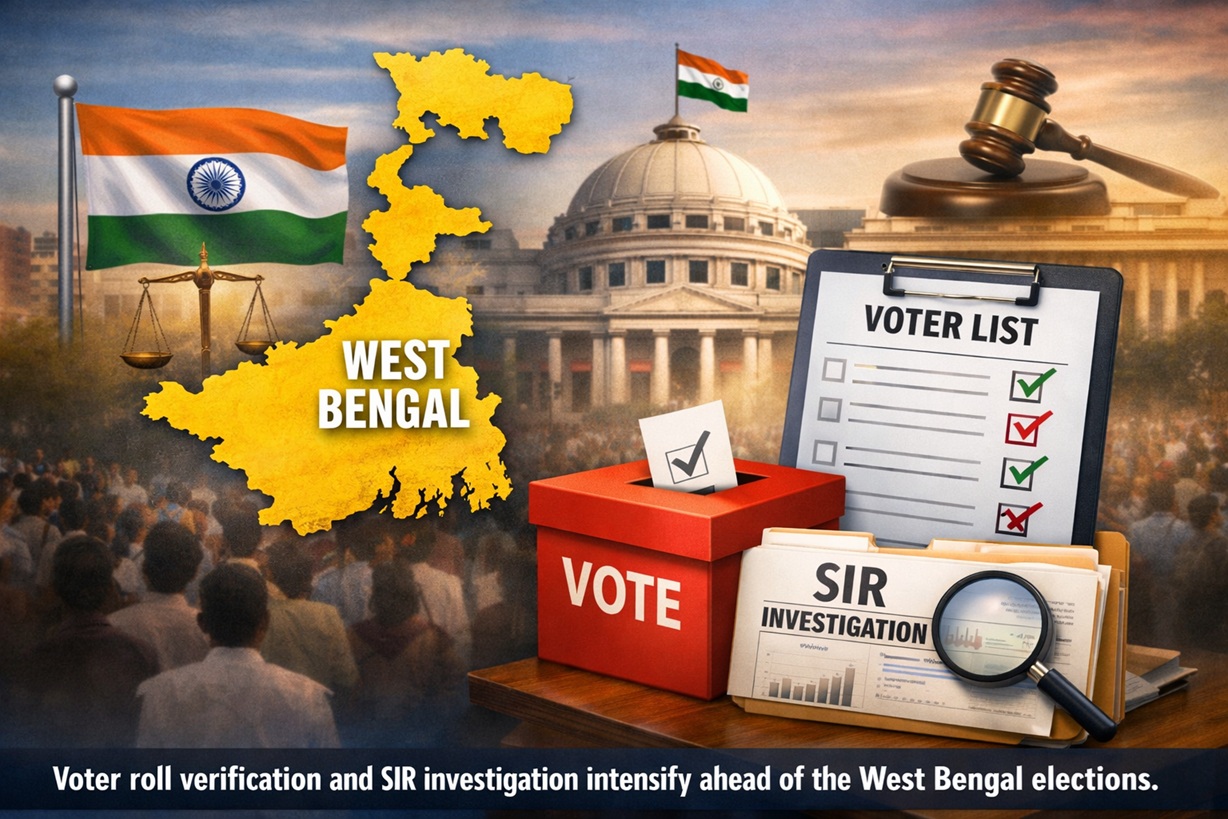
Escalating SIR investigation, voter roll scrutiny, and a new Governor have intensified political speculation over the timing and conduct of the upcoming West Bengal elections.
Political tensions are rising in West Bengal as the Special Investigation Review (SIR) into electoral rolls gathers pace ahead of the West Bengal elections. The scrutiny of millions of voter records, combined with the appointment of a new Governor and ongoing legal oversight, has sparked debate over whether administrative challenges could impact the election timeline.
West Bengal Elections Under Spotlight as SIR Investigation Expands

The political climate in West Bengal has turned increasingly intense as the Special Investigation Review (SIR) continues its scrutiny of voter lists ahead of the upcoming West Bengal elections.
The investigation focuses on verifying electoral rolls and examining alleged discrepancies, including duplicate entries, deceased voters’ names, and suspected “ghost voters.” The process, overseen under judicial supervision, is being viewed as a crucial step toward ensuring electoral transparency.
According to officials familiar with the exercise, millions of voter records are currently under review. The verification process has sparked strong political reactions, particularly from the ruling Trinamool Congress (TMC) government led by Chief Minister Mamata Banerjee.
The Election Commission has maintained that the review aims solely to strengthen electoral integrity.
Judicial Oversight and Electoral Roll Scrutiny
One of the most significant developments in the SIR process is the involvement of judicial officers appointed under the direction of the Supreme Court of India.
These officers are tasked with adjudicating cases related to:
- Deleted voter names
- Doubtful voters
- Alleged discrepancies in voter documentation
Legal experts note that this judicial oversight adds a strong institutional layer to the electoral roll verification process.
Political analysts say such scrutiny could influence the administrative preparations for the West Bengal elections, especially if large-scale corrections in voter lists are required.
Governor Change Signals Administrative Reset
Another key development ahead of the West Bengal elections is the recent change in the state’s gubernatorial leadership.
Former Governor C. V. Ananda Bose has been replaced by K. N. Ravi, a former IPS officer with experience in counter-insurgency operations.

The appointment has drawn attention in political circles because governor changes in election-bound states often carry administrative significance.
Governors play an important constitutional role during election periods, especially in situations involving:
- Law and order concerns
- Election administration
- Constitutional contingencies
Political observers believe the new appointment signals a renewed focus on maintaining administrative neutrality during the upcoming polls.
Voter List Verification: Numbers and Timeline
Officials involved in the SIR exercise say the scale of the review is massive.
Preliminary estimates indicate:
| Process Status | Estimated Numbers |
| Cases reviewed so far | ~1.3 million |
| Pending voter verification cases | 7–8 million |
| Duration of scrutiny completed | 121 days |
| Estimated additional time needed | Around 2 months |
Election administrators say completing the verification of voter lists is essential before the Election Commission can formally announce the West Bengal elections schedule.
The voter roll revision exercise is a standard administrative process carried out periodically across India.
Could the Election Timeline Be Affected?
The state government’s current term is expected to conclude in early May.
However, election law experts point out that elections cannot be conducted without finalized and verified voter lists.
If the voter roll verification process extends beyond the expected deadline, authorities may need additional time to issue election notifications.
According to constitutional experts, several options exist in such scenarios:
- Conduct elections after voter lists are finalized
- Allow limited administrative extension for preparations
- Consider constitutional provisions if an assembly term expires before elections
Any such decision would ultimately be taken by the Election Commission of India in consultation with constitutional authorities.
Political Reactions and Opposition Claims
The SIR exercise has also triggered sharp political exchanges between the ruling Trinamool Congress and opposition parties.
Opposition leaders argue that revising electoral rolls is necessary to ensure free and fair elections. The ruling party, meanwhile, has questioned the timing and scale of the review.
Chief Minister Mamata Banerjee has previously accused central agencies of interfering in state politics, a claim repeatedly denied by the Union government.
The Election Commission of India has reiterated that its processes are independent and guided solely by constitutional mandates.
Administrative Preparedness and Election Security
Election observers note that West Bengal has historically seen high political mobilisation during polls.
Authorities are therefore focusing on:
- Updating electoral rolls
- Ensuring adequate security deployment
- Monitoring potential electoral violations
- Strengthening administrative oversight
The presence of a new Governor and judicial oversight of the SIR review may influence how administrative preparations unfold in the months ahead.
What Happens Next?
The coming weeks are expected to be crucial for West Bengal’s political landscape.
Key developments to watch include:
- Completion of voter roll verification
- Election Commission’s timeline announcement
- Administrative readiness for polling
- Political campaigning ahead of elections
Political analysts say the outcome of the SIR process could shape the narrative of the upcoming West Bengal elections, which are expected to be one of the most closely watched state polls in India.
Conclusion
As the West Bengal elections approach, the Special Investigation Review (SIR) of electoral rolls has emerged as a major administrative and political development.
While authorities describe the process as a routine exercise aimed at improving electoral transparency, the scale of voter verification and the timing ahead of elections have intensified political debate.
With judicial oversight, administrative reshuffles, and millions of voter records under scrutiny, the coming months could significantly shape the electoral environment in the state.
FAQs
Q: What is the Special Investigation Review (SIR) in West Bengal elections?
A: The SIR is an electoral roll verification exercise aimed at identifying discrepancies such as duplicate entries, deceased voters, and doubtful voter records.
Q: Why are voter lists being reviewed before the West Bengal elections?
A: Voter list revisions are conducted to ensure accurate electoral rolls and prevent electoral fraud.
Q: Can elections be held without finalized voter lists?
A: No. Finalized voter lists are required before election notifications are issued by the Election Commission.
Q: What role does the Governor play during elections?
A: The Governor ensures constitutional governance and administrative continuity, especially if political or legal complications arise.
Q: Who supervises disputes related to voter verification?
A: Judicial officers appointed under the oversight of the Supreme Court may adjudicate certain disputes related to electoral rolls.
References