 Digital Team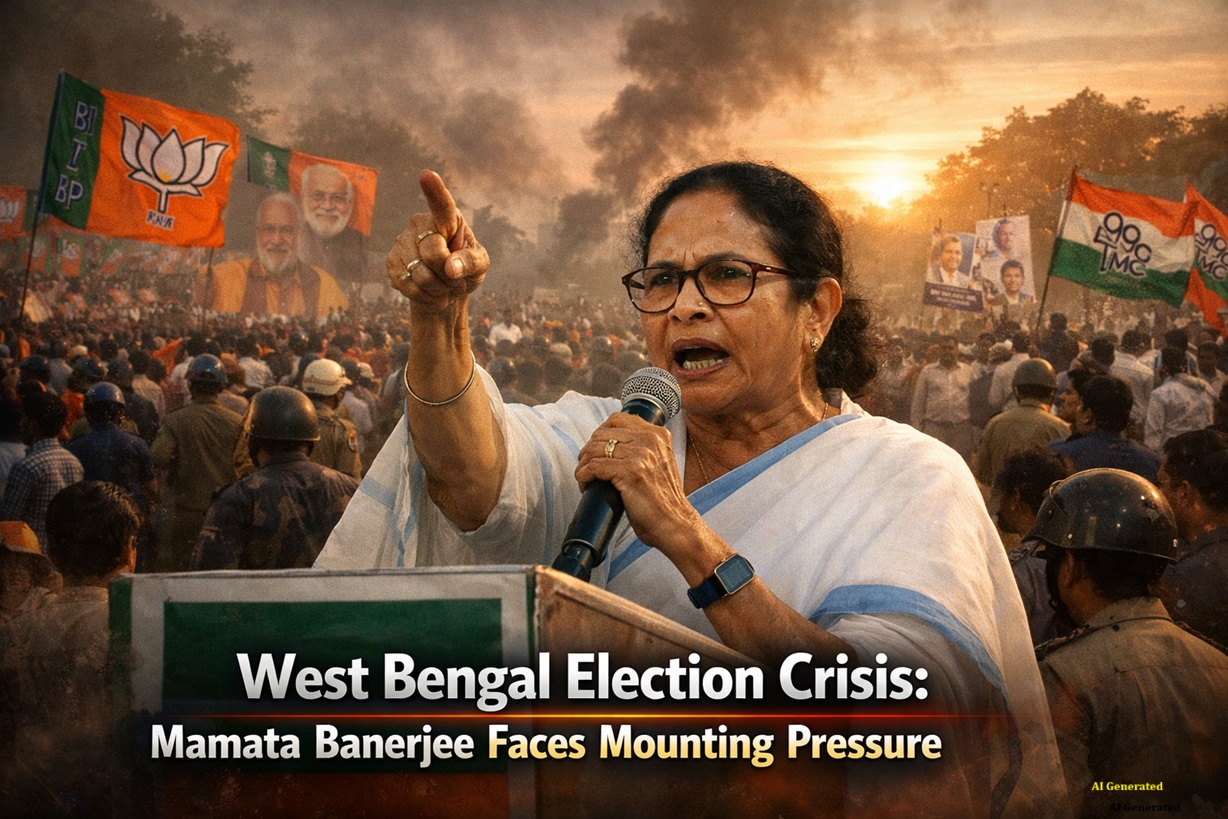
Mounting political pressure, economic concerns, and shifting voter dynamics intensify the West Bengal election crisis for Mamata Banerjee ahead of crucial polls.
The West Bengal election crisis has intensified as Chief Minister Mamata Banerjee faces mounting political, economic, and electoral challenges ahead of key assembly battles. With the Bharatiya Janata Party deploying a multi-layered campaign and cracks emerging in traditional vote banks, the state’s political landscape is witnessing an unprecedented churn.
West Bengal Election Crisis: Political Heat Rises
The West Bengal election crisis is unfolding at a critical juncture, with the ruling Trinamool Congress under pressure from both internal dissent and an aggressive opposition strategy.
Senior BJP leaders, including Narendra Modi, Amit Shah, and J. P. Nadda, have intensified their campaign efforts across the state. Their approach combines high-voltage rallies with booth-level mobilisation, signalling a long-term strategy beyond immediate electoral gains.
Political analysts note that the BJP’s objective appears two-fold: expand its voter base while forcing Mamata Banerjee into defensive territory.
Economic Concerns Add to West Bengal Election Crisis
Economic stagnation has emerged as a key factor in the West Bengal election crisis, especially among urban and middle-class voters.
Key Economic Indicators
- Slower industrial growth compared to neighbouring states
- Rising state debt burden
- Continued migration of skilled youth
- Limited large-scale investment inflows
While welfare schemes such as Kanyashree have gained recognition, critics argue they have not translated into sustained economic expansion.
Experts suggest that economic dissatisfaction is gradually reshaping voter priorities—from welfare-centric politics to employment and industrial development.
BJP Strategy Intensifies Political Contest
The BJP’s campaign strategy reflects a coordinated, multi-tiered approach:
Ground-Level Mobilisation
- Deployment of leaders from multiple states
- Micro-management of constituencies
- Increased presence in rural and semi-urban areas
Star Campaigners
The party has leveraged figures like Yogi Adityanath and Mithun Chakraborty to broaden appeal across demographics.
Strategic Targeting
The focus on key constituencies aims to restrict Mamata Banerjee’s statewide outreach, creating tactical pressure points.
Social Media Battle Shapes Narratives
The West Bengal election crisis is also playing out digitally. BJP’s expanding online ecosystem is challenging TMC’s traditional dominance in regional media.
- Viral content highlighting alleged corruption
- Increased WhatsApp penetration in rural areas
- Younger voters engaging with alternative narratives
Issues like the “cut money” controversy continue to gain traction online, influencing voter perception beyond conventional campaign channels.
Bhowanipore Becomes Political Flashpoint
The constituency of Bhowanipore has emerged as a symbolic battleground in the West Bengal election crisis.
Suvendu Adhikari has positioned himself as a key challenger, aiming to consolidate opposition votes. Meanwhile, smaller political formations entering the fray threaten to fragment traditional vote banks.
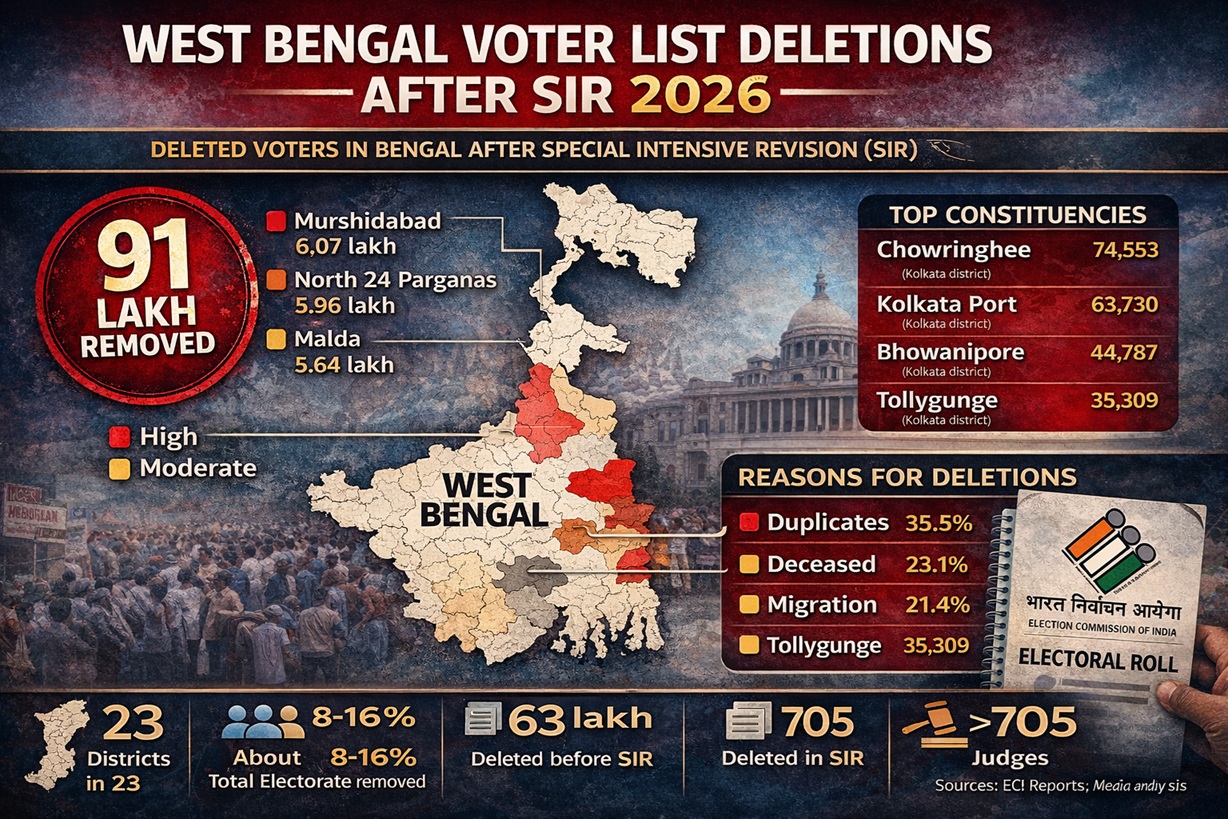
Electoral roll revisions and voter list scrutiny have further heightened tensions, making every vote critical in a closely watched contest.
Legal Battles and Administrative Tensions

Mamata Banerjee’s recent engagements with the Election Commission of India highlight growing institutional friction.
- Multiple complaints filed over administrative changes
- Legal challenges in courts
- Concerns over law and order
Political observers interpret these developments as signs of heightened electoral uncertainty rather than routine procedural disputes.
Women Voters: Shifting Political Equations
Women voters, traditionally a strong support base for TMC, are showing signs of diversification.
Emerging Trends
- Greater focus on safety and governance
- Increased political awareness among young women
- Alternative leadership options within opposition parties
Incidents such as Sandeshkhali have influenced public discourse, particularly among urban voters.
Muslim Vote Dynamics Add Complexity
The West Bengal election crisis is further complicated by evolving dynamics within Muslim-majority constituencies.
Regions such as:
- Murshidabad
- Malda
- North Dinajpur
- South 24 Parganas
are witnessing new political narratives that could impact traditional voting patterns.
Analysts suggest that even marginal vote shifts could significantly alter outcomes in closely contested seats.
Internal Dissent Weakens TMC Structure
Reports of dissatisfaction within the Trinamool Congress have added another layer to the crisis.
- Ticket distribution disputes
- Discontent among party leaders
- Risk of defections
Such internal challenges, combined with external political pressure, are reshaping the electoral landscape.
Psychological Shift Among Voters
One of the most significant developments in the West Bengal election crisis is the changing voter mindset.
Observers note:
- Reduced political fear among voters
- Increased public expression of political preferences
- Greater competitiveness at the grassroots level
This psychological shift could prove decisive in determining electoral outcomes.
Conclusion: What Lies Ahead in West Bengal Election Crisis
The West Bengal election crisis marks a turning point in the state’s political trajectory. With economic concerns, evolving voter expectations, and intensified opposition strategies converging, Mamata Banerjee faces one of the toughest challenges of her political career.
The coming months will determine whether the Trinamool Congress can retain its dominance or whether the BJP’s sustained push will reshape Bengal’s political order. Either way, the crisis signals a more competitive and dynamic electoral future for the state.
FAQ Section
Q1: What is the West Bengal election crisis?
A: It refers to the current political tensions involving Mamata Banerjee, BJP’s aggressive campaign, and shifting voter dynamics.
Q2: Why is Mamata Banerjee facing challenges?
A: Economic concerns, internal dissent, and opposition strategies are key factors.
Q3: How is BJP influencing the election?
A: Through strong leadership campaigns, grassroots mobilisation, and digital outreach.
Q4: What role do women voters play?
A: Women voters are increasingly focusing on governance, safety, and economic opportunities.
Q5: Why is Bhowanipore important?
A: It is Mamata Banerjee’s key constituency and a symbolic political battleground.
References
- EC Bureaucratic Overhaul: Details the Election Commission’s replacement of top officials, sparking TMC-BJP clashes. https://timesofindia.indiatimes.com/videos/the-narrative-election-special/news/west-bengal-elections-2026-ecs-bureaucratic-overh…
- Battlegrounds Beyond Ballot: Analyzes regional stakes, welfare vs. ideology, and youth voter impact in six key areas. https://www.indiatoday.in/india/west-bengal/story/west-bengal-assembly-elections-2026-beyond-the-ballot-the-battlegrounds-that-w…
- Opinion Poll Predictions: TMC edges with 155-170 seats, BJP surges to 100-115 amid tight vote shares. https://www.moneycontrol.com/news/india/west-bengal-elections-opinion-poll-predicts-edge-for-tmc-but-big-rise-in-bjp-s-seat-tall…
- Bhabanipur Battleground: Mamata Banerjee vs. Suvendu Adhikari, with community voter splits deciding the outcome. https://www.ndtv.com/india-news/west-bengal-election-2026-factors-that-make-bhabanipur-a-key-battleground-11235166
- SIR Voter Roll Row: Disputes over Special Intensive Revision fueling disenfranchisement fears and political drama. https://thefederal.com/elections-2026/west-bengal-elections-2026-sir-two-phase-poll-debate-west-asia-crisis-trinamool-bjp-234564