 Digital Team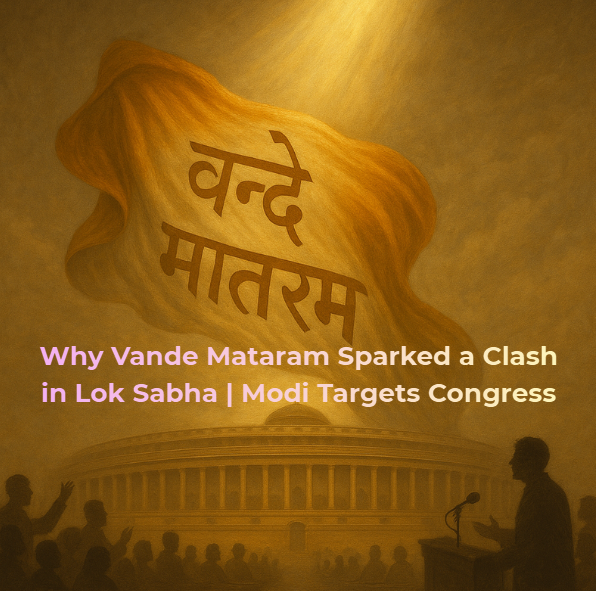
The Lok Sabha Vande Mataram debate turned heated as PM Modi accused Congress of diluting the national song for political gains. Congress counters with historical facts, citing Rabindranath Tagore’s version.
Lok Sabha Winter Session
The Lok Sabha witnessed a heated debate on the 150th anniversary of Vande Mataram, as Prime Minister Narendra Modi launched a sharp attack on the Congress, accusing it of “weakening the status and legacy of India’s national song.” The debate, held as part of the Winter Session of Parliament, triggered a high-decibel political clash over nationalism, history, and the independence movement.
PM Modi’s Charge: ‘Congress Fragmented Vande Mataram for Vote Bank’
PM Modi claimed that Vande Mataram—the iconic song penned by Bankim Chandra Chattopadhyay—was the “spiritual and emotional force behind India’s freedom struggle.” He alleged that the Congress chose to use only a truncated version of the song in 1937 to appease the Muslim League, setting a precedent that “compromised national symbols.”
“Those who fragmented Vande Mataram weakened Mother India’s voice,” PM Modi said, alleging that the Congress “prioritized vote-bank politics over national identity.”
Defence Minister Rajnath Singh echoed the claim, stating that the song inspired countless freedom fighters, yet politics “shrunk its space in independent India.”
Opposition Counters: ‘Historical Facts Being Twisted’
The Congress dismissed the claim as historically inaccurate, arguing that the two-stanza version widely sung today was the same version originally performed. Congress leaders cited that:
- The two verses first appeared when Vande Mataram was published in Bangla Darshan.
- Rabindranath Tagore sang the same two-stanza version at the 1896 Congress session.
- The extended verses became popular only after the publication of Anandamath in 1882.
Opposition parties accused the government of “weaponizing history for political gain,” adding that Tagore’s interpretation is central to the song’s legacy, not its later additions.
The National Song Controversy: A Recurring Fault Line
The debate revived a decades-old dispute over whether the complete or partial version of Vande Mataram should be sung officially. The full version includes references to Hindu deities like Durga, which some factions argue makes it religious in nature, while others assert that it symbolizes the spirit of India.
The BJP leadership argued that rejecting the full version due to Hindu imagery was an act of selective secularism. Opposition leaders countered that India’s national identity is not dependent on imposing religious interpretations, pointing out that national symbols must reflect inclusivity.
No Muslim MP Participates: BJP Points to ‘Silence’
BJP leaders questioned why no opposition Muslim MP participated in the debate, calling it “symbolic of a deeper discomfort within secular parties.” The Opposition dismissed the charge as “manufactured drama,” stating that national identity isn’t measured by who speaks, but by constitutional values.
Why the Vande Mataram Debate Matters Today
The clash reflects a broader political struggle over who defines nationalism in India. With elections approaching, both sides are using the history of Vande Mataram to shape contemporary political narratives:
- BJP positions itself as the defender of cultural nationalism
- Congress stresses inclusive nationalism rooted in constitutional values
The upcoming Rajya Sabha discussion is expected to intensify the Congress vs BJP divide, as both claim authority over the song that once united India’s freedom fighters.
Vande Mataram Debate Is No Longer About a Song
The Vande Mataram debate has shifted from poetry to politics, from cultural heritage to ideological positioning. The Winter Session has made it clear: the question today is not how the song was written, but who owns the legacy of nationalism in modern India. As Parliament continues its discussion, the national song controversy remains a defining battleground for India’s political identity.