 Digital Team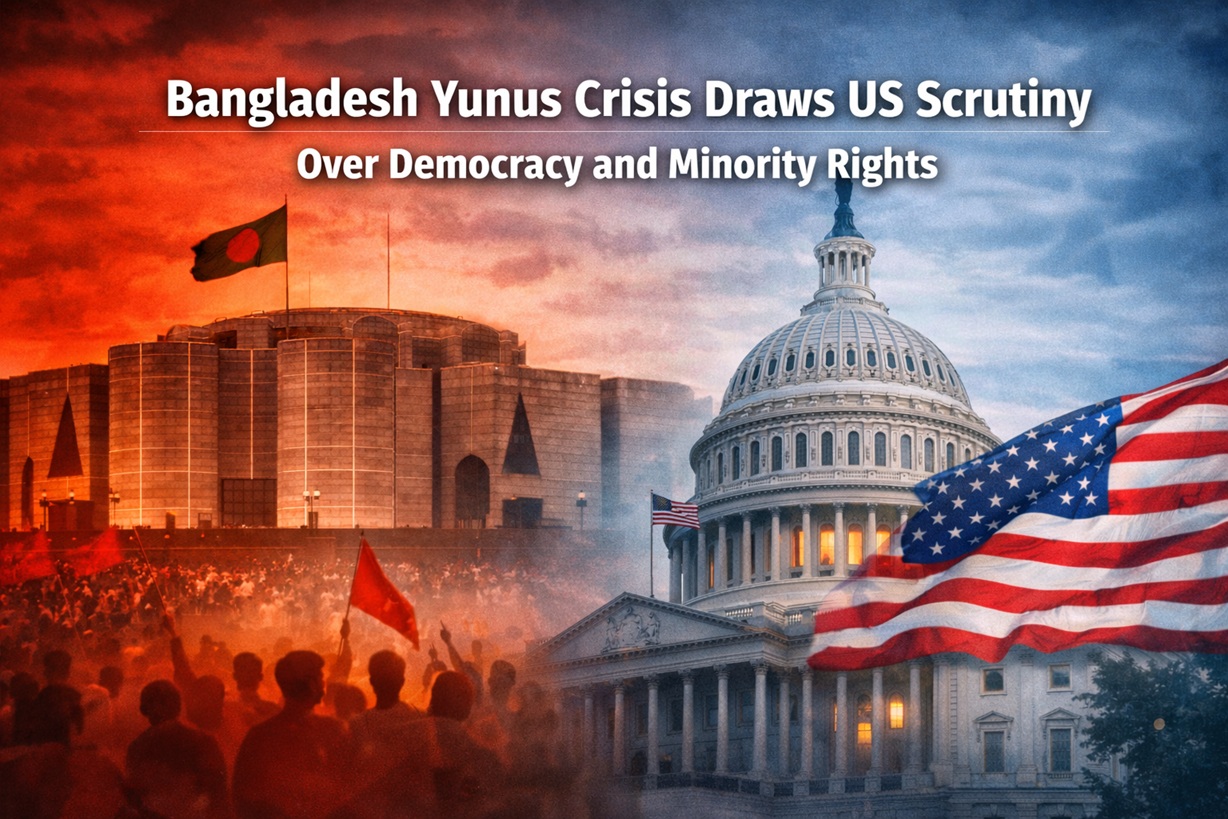
US lawmakers flag Bangladesh Yunus crisis amid allegations of Islamist resurgence and democratic backsliding
The Bangladesh Yunus crisis has begun drawing attention in Washington, with Republican lawmakers and policy commentators in the United States questioning political developments in Dhaka, following allegations by Bangladeshi journalist Salahuddin Shoaib Chowdhury that extremist groups are regaining influence amid a freeze in democratic processes. The developments are being closely watched in India, particularly over concerns relating to minority safety, regional stability, and cross-border security.
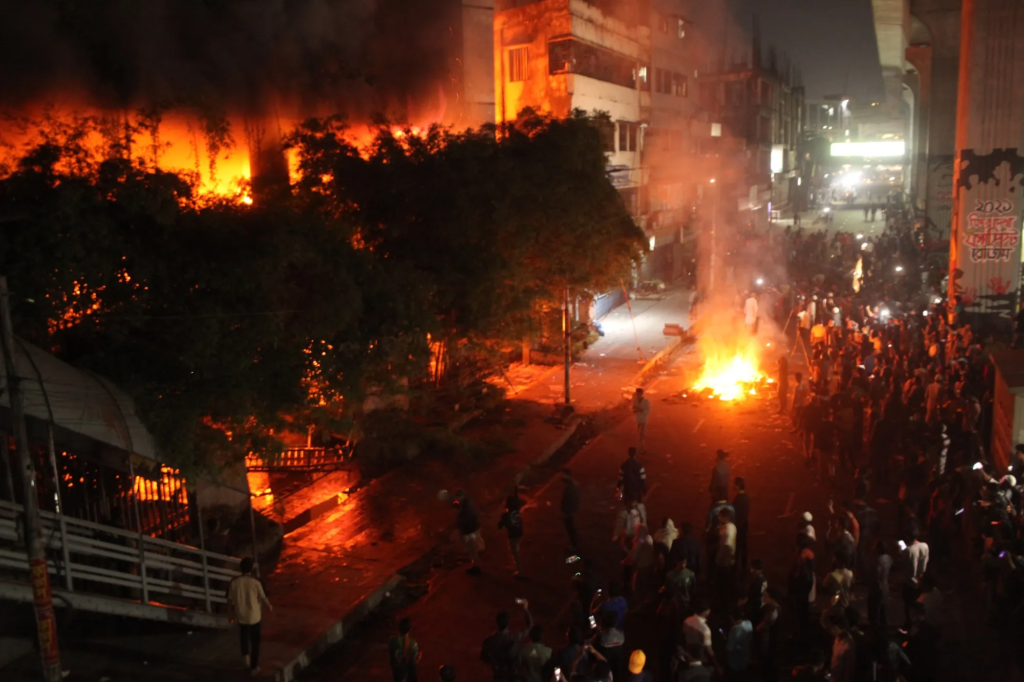
US Focus Sharpens on Bangladesh Yunus Crisis
Lawmakers affiliated with former US President Donald Trump’s Republican Party have started publicly questioning the political trajectory of Bangladesh, marking a noticeable shift in American discourse on the country.
The debate intensified after Salahuddin Shoaib Chowdhury, editor of Blitz, published articles and social media posts alleging that radical Islamist groups are attempting to exploit the current political vacuum in Bangladesh.
Chowdhury has claimed that the interim political arrangement under Muhammad Yunus risks enabling forces opposed to pluralism and constitutional democracy, a charge that Dhaka has not officially responded to.
Allegations of Democratic Freeze and Election Delays
At the centre of the Bangladesh Yunus crisis is the growing concern that national elections may be delayed indefinitely, raising fears of prolonged political uncertainty.
In a widely circulated post, Chowdhury stated that “democracy in Bangladesh is in deep freeze,” alleging that radical groups were attempting to recast ongoing unrest as a “revolution”.
While these claims remain contested, international observers note that sustained instability could weaken institutional safeguards, particularly in a country with a history of volatile political transitions.
Minority Safety Emerges as Global Concern
One of the most troubling aspects of the Bangladesh Yunus crisis is the reported increase in attacks on minority communities, including Hindus, Christians, and Ahmadiyyas.
US-based policy analysts and human rights advocates have highlighted recent incidents of mob violence and alleged blasphemy-related attacks, which have drawn reactions from American lawmakers on social media.
Republican representatives and commentators have cited individual cases to question whether Bangladesh’s long-standing secular framework is under strain, urging the US administration to reassess its engagement strategy.
Also Read: https://dailydozes.com/bangladesh-violence-dhaka-crisis/
US Policy Debate Intensifies
Think tanks such as the Gatestone Institute have also entered the debate, publishing commentaries that criticise what they describe as Washington’s muted response to Islamist groups with a history of political violence.
Some US lawmakers have tagged senior officials, including the Secretary of State and White House advisers, calling for accountability and clarity on America’s position regarding Bangladesh.
Diplomatic sources indicate that statements from senior US officials, including Senator Marco Rubio, could be forthcoming as scrutiny grows.
Why the Bangladesh Yunus Crisis Matters for India
For India, the unfolding Bangladesh Yunus crisis carries direct strategic implications.
India shares deep historical, cultural, and economic ties with Bangladesh, and instability across its eastern border raises concerns over:
- Cross-border extremism
- Refugee pressures
- Security of religious minorities
- Disruption to regional connectivity initiatives
Strategic analysts in New Delhi note that global recognition of democratic backsliding in Bangladesh could shape future diplomatic and security responses, especially if the situation worsens.
Historical Context: From Pluralism to Polarisation
Bangladesh has long been viewed as a pluralistic society rooted in the syncretic Ganga-Jamuni cultural tradition, particularly in urban centres like Dhaka.
Observers warn that political polarisation and street violence, if left unchecked, risk eroding that legacy. Human rights groups stress that ideological extremism thrives in governance vacuums, underscoring the need for timely elections and institutional accountability.
Official Silence and Mounting International Pressure
Despite the growing international debate, official responses from Dhaka remain limited.
Analysts say continued silence may amplify speculation, while clearer communication and a defined electoral roadmap could help stabilise the situation.
With US lawmakers now openly discussing the Bangladesh Yunus crisis, diplomatic pressure is expected to extend beyond Washington to other global forums.
What Comes Next for Bangladesh Yunus Crisis
The Bangladesh Yunus crisis has moved from domestic unrest to international scrutiny, with the United States, India, and human rights groups closely tracking developments.
As global attention intensifies, the coming weeks will be crucial in determining whether Bangladesh restores democratic momentum or faces deeper isolation. For India and its partners, the focus remains on regional stability, minority protection, and constitutional governance.
FAQs
Q1: What is the Bangladesh Yunus crisis?
A: It refers to political uncertainty in Bangladesh amid allegations of delayed elections, democratic freeze, and extremist resurgence.
Q2: Who raised concerns internationally?
A: US Republican lawmakers, policy institutes, and journalist Salahuddin Shoaib Chowdhury have highlighted the issue.
Q3: Are minority communities affected?
A: Reports indicate increased violence against Hindus, Christians, and Ahmadiyyas, though official confirmations vary.
Q4: Why is India concerned?
A: Due to border security, regional stability, refugee risks, and historical ties with Bangladesh.
Q5: Has the US government responded officially?
A: Formal statements are awaited, though individual lawmakers and think tanks have spoken out.
References: