 Digital Team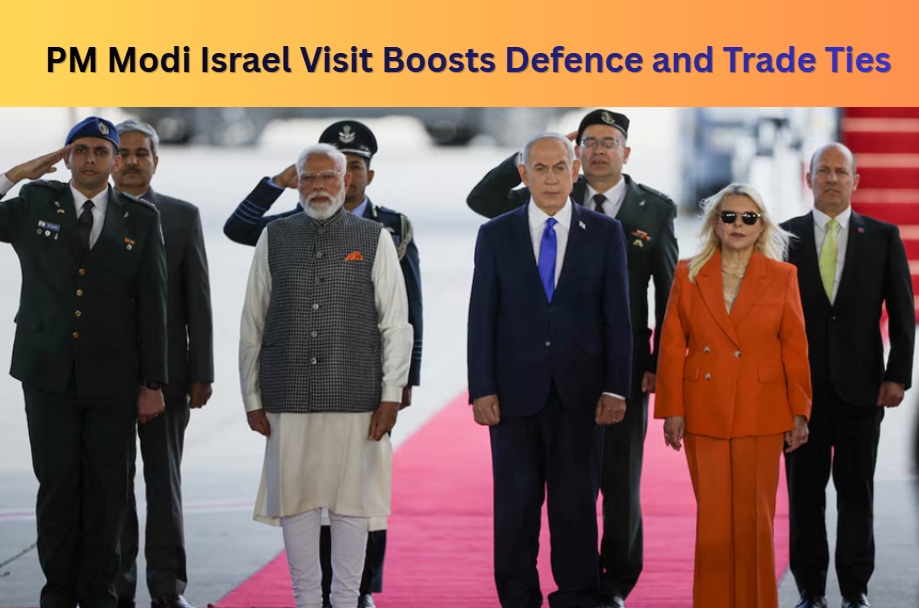
Prime Minister Narendra Modi on Wednesday begins his two-day PM Modi Israel visit, marking his second official trip to Tel Aviv after his landmark 2017 tour. During the visit, Modi is scheduled to address the Knesset and hold high-level talks with Israeli Prime Minister Benjamin Netanyahu, focusing on defence cooperation, trade expansion, and regional security.
The visit comes at a time of heightened tensions in West Asia, with ongoing conflicts and renewed diplomatic alignments reshaping the geopolitical landscape. Officials say the visit aims to strengthen India-Israel strategic partnership across security, technology, innovation, and trade.
Address to the Knesset: A Rare Diplomatic Honour
One of the highlights of the PM Modi Israel visit is his address to the Knesset — Israel’s Parliament. Such invitations are extended selectively and signal political trust between nations.
Before departure, Modi said he looked forward to “strengthening cooperation across sectors and exchanging views on regional and global developments.”
The Ministry of External Affairs (MEA) described the visit as a “continuation of deepening strategic convergence” between the two democracies.
Defence Cooperation Takes Centre Stage
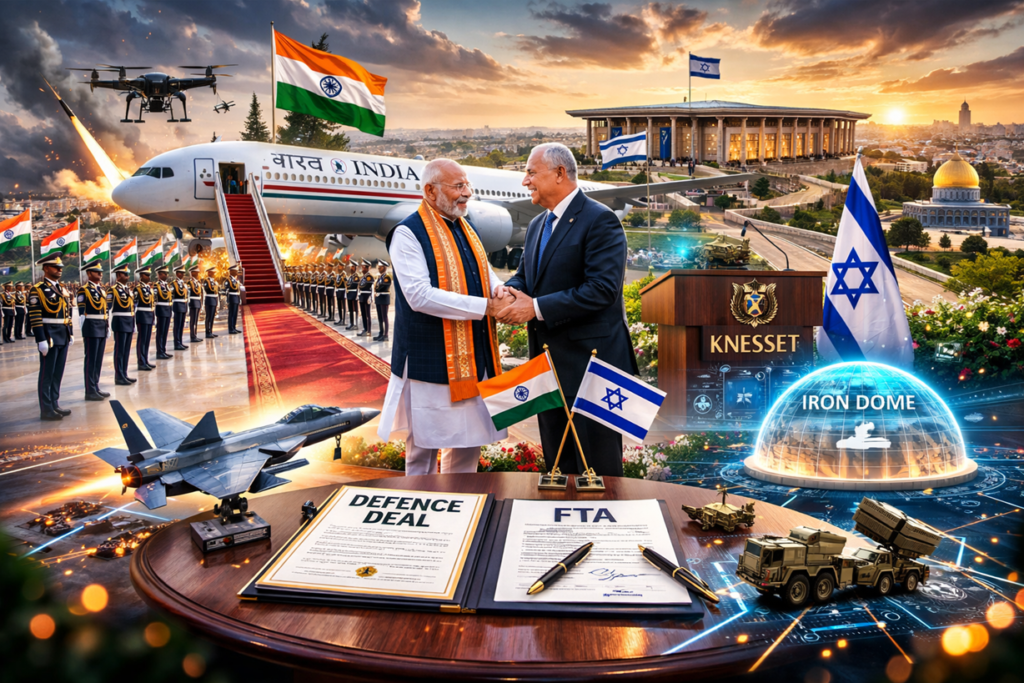
$6.3 Billion Defence Deals Under Discussion
Defence remains a key pillar of the India-Israel relationship. During the PM Modi Israel visit, discussions are expected around:
- Advanced drone systems
- Precision air-to-surface missile technology
- Air defence collaboration
- Counter-drone systems
- Expanded joint manufacturing under “Make in India”
Government sources indicate potential defence agreements worth approximately $6.3 billion, though official confirmation is awaited.
Israel is among India’s top defence suppliers. Cooperation spans missile systems, UAV technology, surveillance platforms, and cybersecurity infrastructure.
Air Defence and Technology Transfers
Officials say discussions may include technology cooperation similar to Israel’s advanced air defence systems. India has already strengthened its layered air defence network in recent years.
Defence manufacturing partnerships are also expected to expand under the Make in India initiative, enabling Israeli firms to produce equipment in India for domestic use and exports.
India-Israel Free Trade Agreement in Focus
The proposed India-Israel Free Trade Agreement (FTA) is also likely to feature prominently. Negotiations have been ongoing, with both sides seeking greater access in sectors such as:
- Agriculture technology
- Water management
- Artificial intelligence
- Cybersecurity
- Pharmaceuticals
Trade between India and Israel has grown significantly over the past decade, excluding defence transactions. The FTA could further diversify economic engagement.
West Asia Geopolitics and Strategic Autonomy
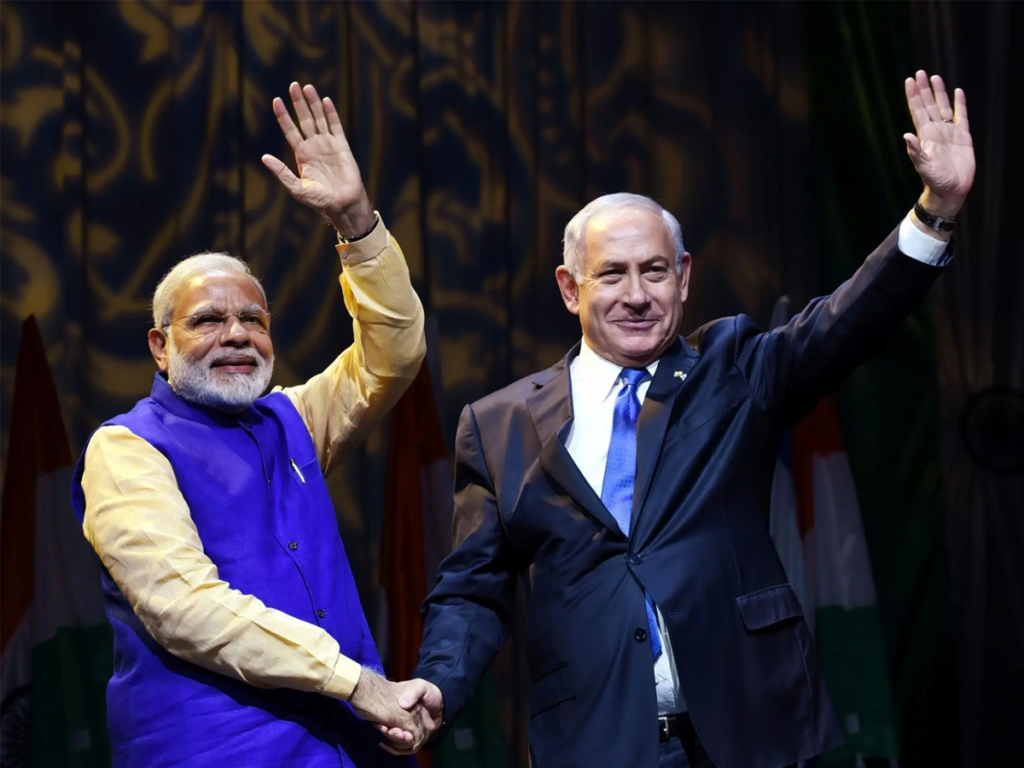
The PM Modi Israel visit takes place amid shifting alignments in West Asia. Regional blocs are evolving, with Saudi Arabia, the UAE, and other countries recalibrating ties.
India has maintained what it calls “strategic autonomy,” balancing relations with Israel, Arab nations, Iran, and the United States. Analysts say this visit underscores India’s effort to expand influence without formally aligning with any bloc.
A senior diplomatic analyst noted, “India’s West Asia policy is no longer reactive. It is proactive, diversified, and security-driven.”
Political Reactions in India
The visit has triggered debate domestically. Opposition leaders have questioned the timing, citing humanitarian concerns in Gaza and regional sensitivities.
Congress leaders have argued that India must balance security partnerships with humanitarian considerations. The government, however, maintains that national interest and long-term strategic cooperation guide foreign policy decisions.
Officials reiterate that India supports dialogue and a peaceful resolution to regional conflicts.
Diaspora Connect and Symbolism
Beyond defence and trade, the PM Modi Israel visit carries symbolic weight. India and Israel elevated ties to a strategic partnership in 2017.
The ceremonial reception, guard of honour, and high-level engagements reflect the maturity of the relationship. India and Israel share cooperation in innovation, water conservation, agriculture, startups, and homeland security.
Observers note that diplomatic optics — including high-profile welcomes and parliamentary addresses — often signal deeper strategic intent.
Why the PM Modi Israel Visit Matters
Key Takeaways
| Area | Expected Outcome |
| Defence | Expanded military cooperation & joint production |
| Trade | Acceleration of FTA talks |
| Technology | Collaboration in AI, drones, cybersecurity |
| Geopolitics | Strengthening India’s West Asia footprint |
| Diplomacy | Enhanced strategic convergence |
The visit signals India’s intent to consolidate its West Asia strategy while reinforcing defence preparedness and economic diplomacy.
What Next After PM Modi Israel Visit?
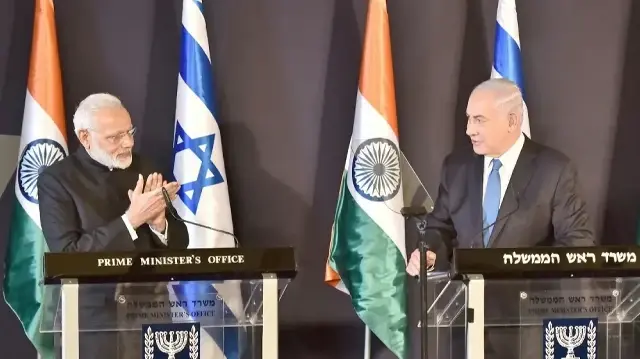
The real impact of the PM Modi Israel visit will unfold in the coming months as defence agreements, trade negotiations, and technology partnerships take shape.
Analysts expect follow-up visits by defence and commerce delegations to operationalise announcements. If concluded, the FTA and major defence contracts could significantly reshape bilateral trade volumes and security architecture.
As India navigates a volatile geopolitical climate, the visit underscores New Delhi’s ambition to play a larger role in West Asia while maintaining diplomatic balance.
The PM Modi Israel visit thus marks not merely a symbolic engagement but a calibrated strategic step in India’s evolving foreign policy framework.
FAQs
Q: Why is PM Modi’s Israel visit significant?
A: It strengthens defence, trade, and geopolitical cooperation between India and Israel.
Q: Will PM Modi address the Knesset?
A: Yes, addressing the Knesset is a key highlight of the visit.
Q: What defence deals are expected?
A: Talks include drones, missile systems, and air defence technology worth billions of dollars.
Q: Is an India-Israel FTA being discussed?
A: Yes, both countries are working toward finalising a Free Trade Agreement.
Q: How does this impact West Asia geopolitics?
A: It reinforces India’s strategic autonomy while expanding its regional footprint.
References