 Digital Team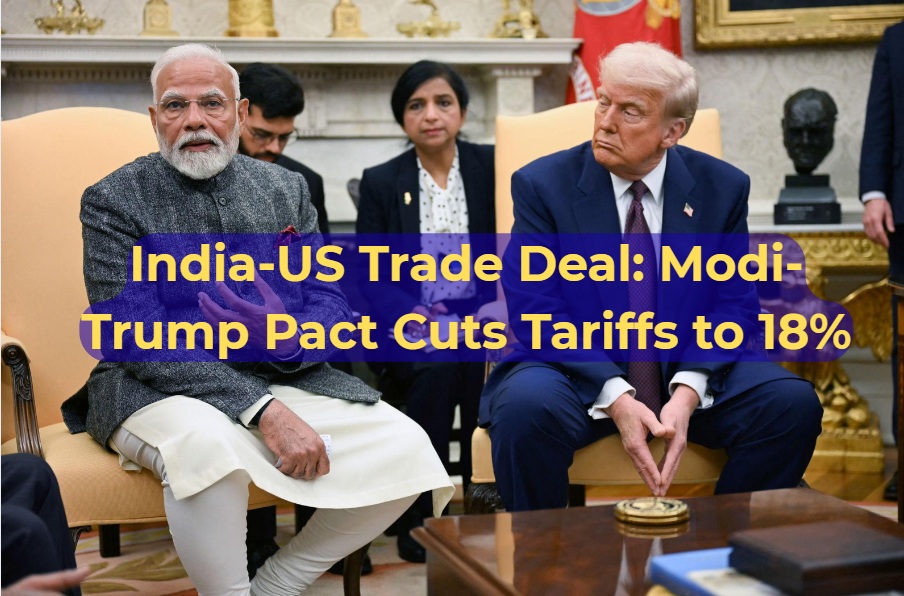
India-US trade deal resets economic ties as Washington cuts tariffs on Indian goods to 18%, strengthening strategic and supply-chain cooperation
India and the United States clinch a major India-US trade deal, with Washington slashing tariffs on select Indian exports from 50% to 18% following high-level negotiations led by Prime Minister Narendra Modi and US President Donald Trump. Announced this week, the agreement boosts Indian exporters, deepens strategic alignment, and signals a decisive reset in bilateral economic relations amid global supply-chain realignments.
India-US Trade Deal Marks a Strategic Reset
The India-US trade deal comes at a critical juncture for global commerce, as economies recalibrate partnerships in response to protectionism, geopolitical churn, and post-pandemic disruptions. For New Delhi, the tariff rollback restores price competitiveness across manufacturing and labour-intensive sectors. For Washington, it reinforces a trusted Indo-Pacific partnership while diversifying supply chains.
Officials describe the agreement as a “calibrated, forward-looking understanding” that balances market access with strategic interests on both sides.
Why the India-US Trade Deal Matters Now
Bilateral trade between India and United States has crossed USD 190 billion, but tariff and non-tariff barriers have long remained friction points. The withdrawal of India from the US Generalized System of Preferences (GSP) in 2019 had raised costs for exporters in textiles, engineering goods, agriculture, and pharmaceuticals.
The new India-US trade deal seeks to reverse some of these disadvantages while addressing American concerns around regulatory transparency, intellectual property, and market access.
Key Highlights of the India-US Trade Deal
- Tariff reduction: Duties on select Indian goods cut sharply from 50% to 18%
- Export boost: Improved competitiveness for manufacturing, textiles, and pharma
- Strategic alignment: Deeper cooperation in defence, technology, and clean energy
- Market response: Positive sentiment across export-linked stocks and indices
A senior trade official notes, “This is a win-win outcome that protects domestic interests while expanding long-term market access.”
Modi’s Negotiating Strategy Behind the Tariff Cut
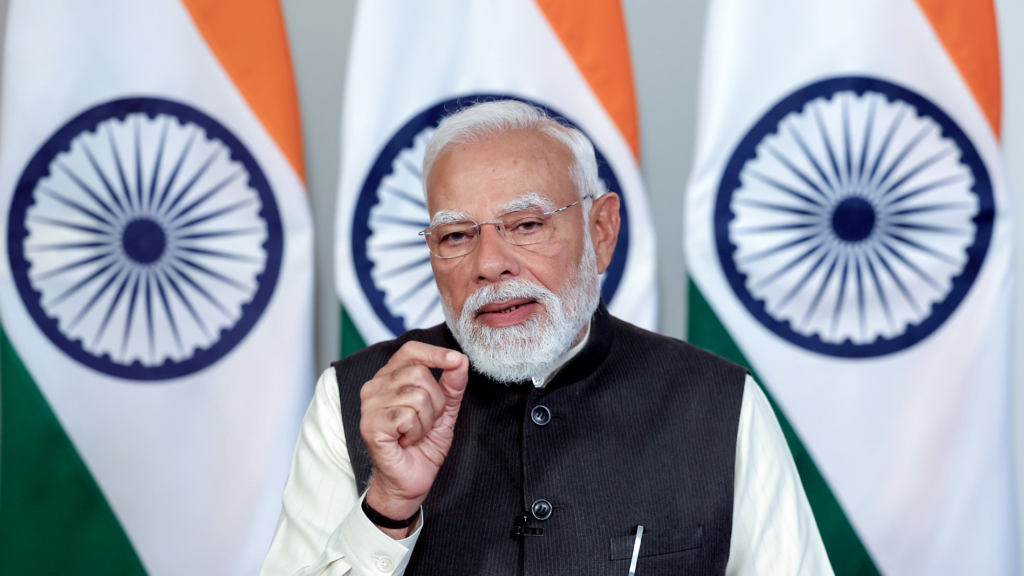
Prime Minister Modi’s approach to the India-US trade deal rests on three pillars:
1. Economic Leverage
India highlighted its market size, growth trajectory, and expanding middle class, positioning itself as a long-term opportunity for American businesses.
2. Geopolitical Convergence
Trade talks were aligned with broader cooperation in the Indo-Pacific, defence manufacturing, and technology partnerships, strengthening New Delhi’s bargaining power.
3. Long-Term Reciprocity
Rather than a purely transactional bargain, India pushed for a framework enabling sustained trade growth, making concessions politically viable on both sides.
Sectors Set to Gain from the India-US Trade Deal
Manufacturing and Engineering
Lower duties on auto components, machinery, and metal products enhance India’s export edge.
Textiles and Apparel
Reduced tariffs improve margins in labour-intensive segments, benefiting MSME-driven clusters.
Pharmaceuticals and Medical Devices
Regulatory cooperation and faster approvals reinforce India’s role as the “pharmacy of the world”.
IT and Services
While services are not tariff-led, visa facilitation and regulatory alignment indirectly support Indian IT exports.
What India Offers in Return
The India-US trade deal is reciprocal, not unilateral. India commits to:
- Streamlining regulatory standards for US firms
- Increasing imports of US crude oil, LNG, and clean-energy technology
- Expanding defence and technology co-development under Make in India
- Offering limited agricultural market access in select segments
These concessions signal openness while safeguarding sensitive domestic sectors.
Boost to Make in India and Supply-Chain Shift
Lower US tariffs directly support Make in India and Atmanirbhar Bharat. As global firms look beyond China to diversify production, India’s improved access to the US market strengthens its case as a manufacturing hub.
The outcome: higher value-added exports, technology inflows, and job creation rather than reliance on low-margin goods.
China Factor and Indo-Pacific Signal
Though the agreement does not explicitly reference China, its implications are clear. The India-US trade deal enhances India’s attractiveness as companies de-risk supply chains and reduce over-dependence on a single geography.
Trade cooperation complements defence agreements, intelligence sharing, and collaboration in semiconductors, AI, and space technologies.
Impact on MSMEs and Export Clusters
Micro, Small and Medium Enterprises emerge as key beneficiaries. Lower tariffs reduce entry barriers, while predictable trade rules cut compliance costs.
Export clusters in Gujarat, Maharashtra, Tamil Nadu, and Punjab are expected to see tangible gains in the near term.
Challenges and What to Watch
Despite the breakthrough, challenges remain. Non-tariff barriers, quality standards, and compliance costs can still constrain exporters. Effective implementation will determine whether tariff cuts translate into real market access.
India must also balance increased imports—particularly in energy and agriculture—against domestic producer interests.
A Calculated Win for India
The India-US trade deal marks a calculated strategic win for New Delhi. By securing steep tariff reductions while offering measured concessions, the Modi government boosts export competitiveness, strengthens investor confidence, and deepens a pivotal global partnership. If implemented effectively, the agreement could serve as a template for India’s future trade diplomacy and reinforce its role as a central pillar of the global economy.
FAQs |
Q: What is the India-US trade deal?
A: It is an agreement under which the US cuts tariffs on select Indian goods from 50% to 18%.
Q: Who led the negotiations?
A: Prime Minister Narendra Modi and US President Donald Trump spearheaded the talks.
Q: Which sectors benefit most?
A: Manufacturing, textiles, pharmaceuticals, and MSME-driven exports.
Q: Why is the tariff cut significant?
A: It restores price competitiveness for Indian exporters in the US market.
Q: Does the deal affect global supply chains?
A: Yes, it positions India as a credible alternative manufacturing hub.
References