 Digital Team
Former Pakistan Prime Minister Imran Khan is alive, but is undergoing severe mental torture, isolation and restricted communication inside Adiala Jail, his sister Dr. Uzma Khanum stated following a 20-minute jail meeting on Tuesday. The confirmation is the first human-to-human proof countering the wave of Imran Khan death rumours, fake news, and coordinated narratives circulating across Pakistan and international social networks.
According to Dr. Uzma Khanum, the Imran Khan sister jail meeting revealed alarming conditions: “He is being kept in isolation. He is not allowed to speak to anyone. He is locked inside the room all day. It is mental torture.” She went further, issuing the strongest direct accusation yet — Army Chief Asim Munir is responsible.
Her remarks have intensified national anger, fueling demonstrations across major Pakistani cities. The most trending chant among supporters remains simple: “Imran Khan is alive.”
Inside Adiala Jail: Isolation, Solitary Confinement, and a Political Pressure Cooker
Reports from PTI-linked sources and lawyers suggest that Imran Khan solitary confinement in Adiala Jail has been used as a tool of humiliation and psychological pressure. The once-Prime Minister is allegedly barred from social contact, limited in reading material, and has been denied direct access to legal counsel on multiple occasions.
The allegations feed into existing concerns over military dominance in Pakistan, what critics call “Asim Law”, and mounting fears that a de-facto martial law exists behind the civilian façade under the current administration of Shehbaz Sharif.
Opposition leaders describe the conditions as “tyranny accusations in plain sight”, arguing that family visitation denied, intimidation of PTI workers, and digital censorship all contribute to a systematic attempt to erase Khan’s political presence.
Asim Munir Accused: The Growing Shadow Over Pakistan’s Military Establishment
The statement by Uzma Khanum lands at a particularly vulnerable moment for Army Chief Asim Munir, who is increasingly framed as the architect of a political trap meant to eliminate Khan’s influence and neutralize Pakistan Tehreek-e-Insaf (PTI) as a national force.
Analysts and activists suggest Munir sought to consolidate power through crisis manufacturing, leveraging a climate of fear and instability to justify broader control — a classic military playbook in Pakistan’s turbulent history.
Critics now argue the plan backfired: PTI says Imran Khan alive, and the public pressure forced the government to permit a sister visit after days of silence. The long-denied meeting served as the single most powerful blow against the orchestrated “Imran Khan death hoax trending in Pakistan.”
Media Failure and the Indian Question: Who Actually Broke the Story?
In an unexpected twist, global audiences are asking a pointed media question: Who demanded proof of life?
As bizarre as it sounds, no major Western or Middle Eastern outlet — not Al Jazeera, Al Arabiya, CNN, or BBC — pressed the issue. Instead, Indian reporters, digital networks, and YouTube platforms elevated the crisis into mainstream discourse.
Pakistani officials repeatedly attacked interviewees who spoke to Indian journalists, calling it “traitorous.” Yet the outcome was undeniable: pressure worked.
The Imran Khan proof of life demand forced state officials into a corner, accelerating visitation approval and public statements from PTI leaders asserting, again and again, Imran Khan is alive in Adiala Jail.
Political Fallout: Nawaz Sharif, Shehbaz Sharif, and the Battle Over Pakistan’s Future
While Asim Munir appeared to aim for a nationwide eruption to justify sweeping powers, the scenario changed. Nawaz Sharif, ever the political tactician, outmaneuvered the generals by pushing his brother Prime Minister Shehbaz Sharif to distance himself from the emerging crisis.
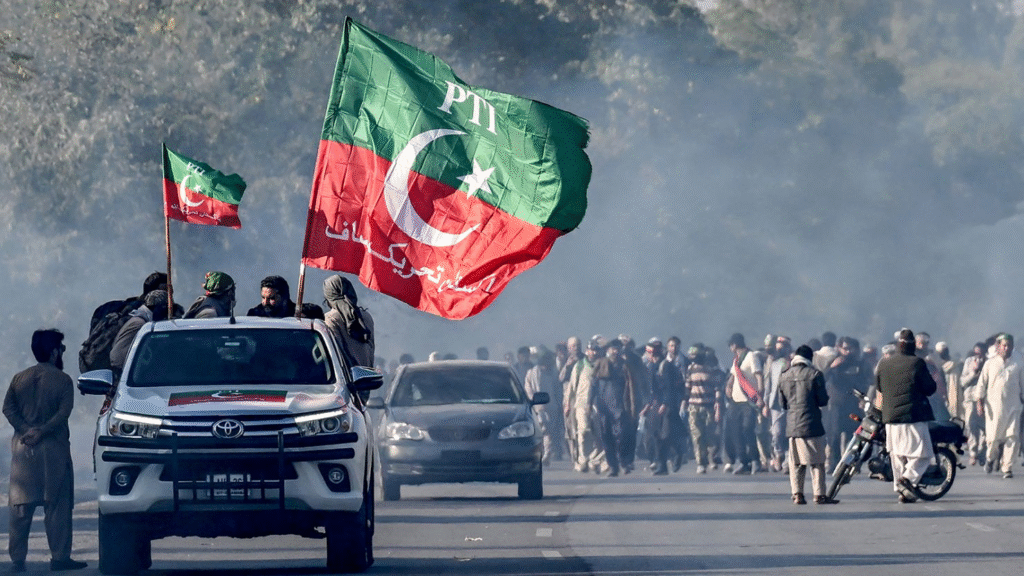
Instead of chaos, Islamabad showcased paralysis. Ministers fled abroad — a move many Pakistanis found shocking — while the Imran Khan Pakistan protests persisted without yielding the violent outcome the military narrative required.
The question now reverberates worldwide: Is Pakistan sliding toward dictatorship? Or is the civilian establishment regaining leverage through diplomatic pressure and coordinated political calculation?
Where Is Imran Khan Now? Alive, Isolated, and Angry
What is certain is this: Imran Khan is alive, extremely frustrated, and aware of the alleged conspiracy driving his confinement. According to his sister:
“Imran Khan is very angry. He knows who is responsible. He knows it is being done at the behest of Asim Munir.”
Her words ignite a political torch. PTI supporters will not remain silent, especially after what they view as psychological warfare against their leader. The movement now has a rallying cry backed by eyewitness testimony, not speculation.
Imran Khan Death Rumours: From Afghan Times to Digital Propaganda
It began with a sudden surge of coordinated posts, articles, and foreign blogs claiming “Imran Khan murdered in jail”, “Imran Khan is dead”, and “Imran Khan where is he now?”
The most viral came from Afghan Times, amplified by anonymous Telegram channels and Pakistan-based troll farms. The goal? Trigger national revolt, justify military takeover, and declare Pakistan ungovernable without army control.
Instead, it collapsed.
The people demanded clarity.
And the proof came through family testimony: Imran Khan is alive.
The Road Ahead: Pakistan’s Most Dangerous Question
The crisis has moved past rumour. It is now about accountability.
- If mental torture is proven, who ordered it?
- If isolation is strategic, who benefits?
- If Asim Munir is accused, will civilian leaders challenge him?
Every answer leads back to the same core battle: Civilian democracy vs. military dominance in Pakistan. What happens next will determine the fate of Pakistan’s politics — and the legacy of a leader who remains, quite literally, alive and unbroken inside Adiala Jail.