 Dr. Biswendu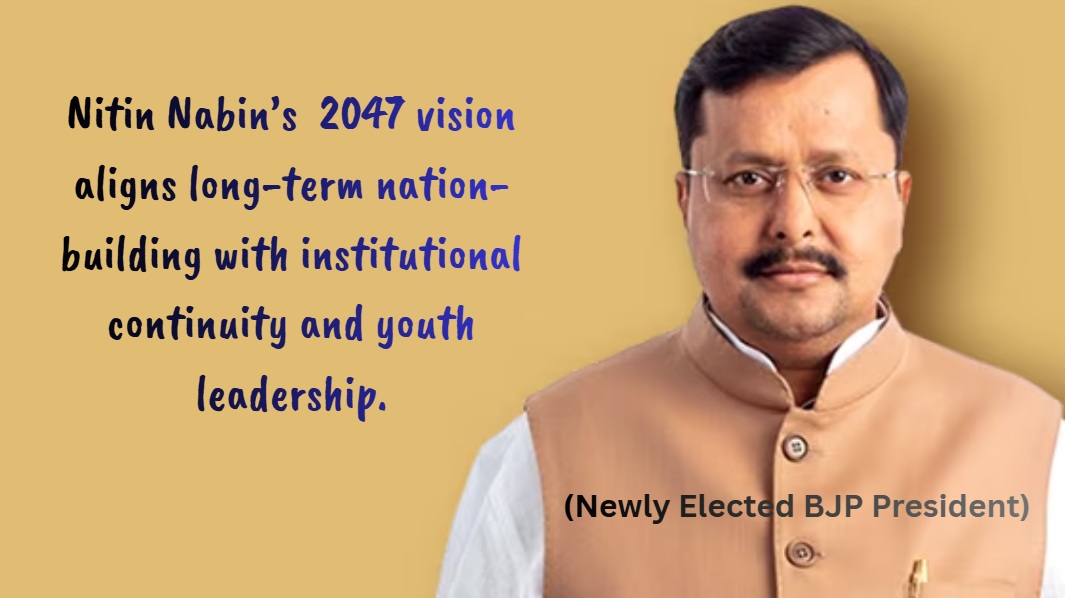
With Nitin Nabin elected BJP national president in New Delhi, the ruling party pivots towards generational leadership, long-term strategy for 2029 and beyond, and organisational continuity under Prime Minister Narendra Modi’s vision.
The BJP President Election entered a decisive new phase on Monday as Nitin Nabin formally assumed charge as the national president of the Bharatiya Janata Party at the party headquarters in New Delhi, in the presence of Narendra Modi and senior leaders. The transition underscores the BJP’s push towards younger leadership while reaffirming ideological continuity, organisational discipline, and a long-term roadmap aimed at India’s political landscape through 2047.
BJP President Election Marks a Strategic Leadership Shift
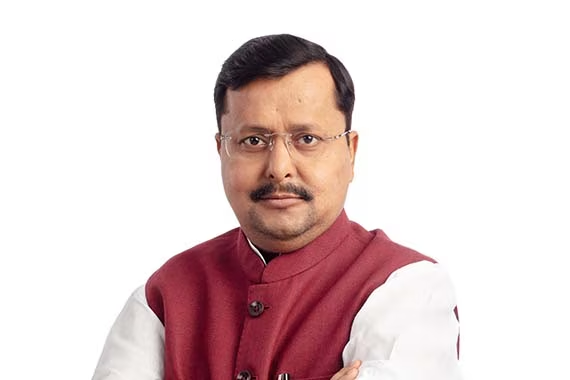
The elevation of 45-year-old Nitin Nabin is being widely interpreted within the party as more than a routine organisational change. BJP leaders describe it as a calibrated move aligned with Prime Minister Modi’s long-term political vision — from grassroots mobilisation at the panchayat level to national governance.
At the ceremony, Modi addressed party workers, stressing that leadership positions may change, but the party’s ideals remain constant. “In organisational matters, the party president is my boss,” Modi said, drawing applause and reinforcing the BJP’s emphasis on internal hierarchy and collective functioning.
Nitin Nabin’s Elevation and the BJP’s 2047 Roadmap
The BJP President Election comes at a time when the party is actively planning for the next quarter-century, with 2047 — the centenary of India’s Independence — as a strategic milestone. According to senior functionaries, Nabin’s mandate includes translating the Modi government’s governance model into “next-generation politics”.
The Rashtriya Swayamsevak Sangh (RSS), the BJP’s ideological mentor, has repeatedly flagged the need for leadership renewal. By entrusting the party’s reins to a relatively young leader, the BJP signals its intent to groom future leadership that is ideologically rooted yet electorally agile.
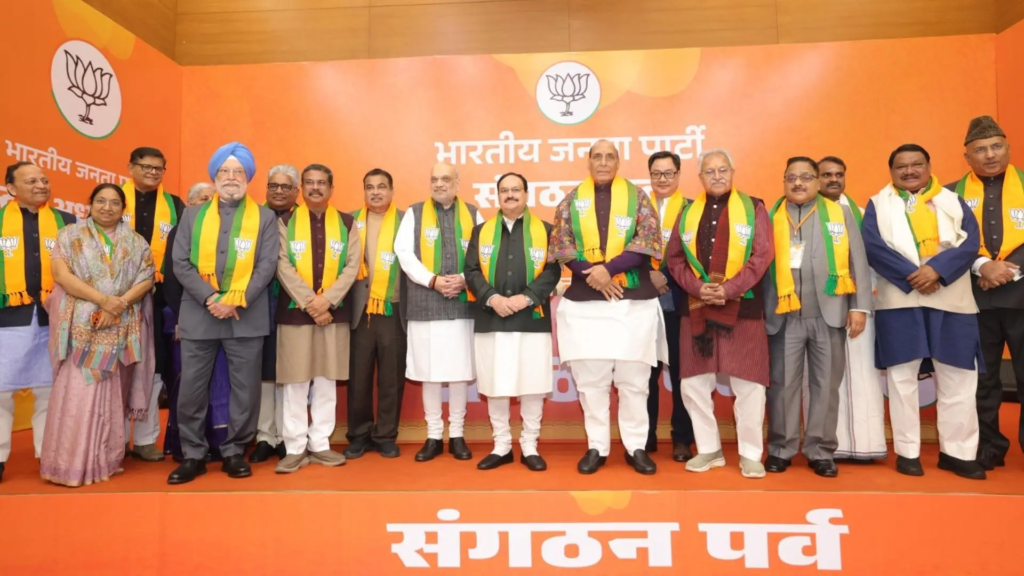
From ‘North India Party’ to Pan-India Presence
Prime Minister Modi used the occasion to highlight the BJP’s geographical expansion over the past decade. Rejecting the pre-2014 narrative that branded the party as limited to North India, Modi cited electoral and organisational breakthroughs across southern and eastern states.
He referred to the BJP’s growing urban footprint and municipal victories, arguing that ideology and governance outcomes — rather than regional stereotypes — now define the party’s national appeal.
Governance Claims and Welfare Outreach
During his address, Modi defended flagship welfare initiatives, particularly the free foodgrain scheme for nearly 80 crore beneficiaries. He said the programme prevented large-scale hunger during the Covid-19 pandemic and reflected the government’s commitment to inclusive growth.
Party leaders later said these governance achievements form the backbone of the BJP’s political messaging as it prepares for future electoral contests.
Organisational Discipline and Leadership Culture
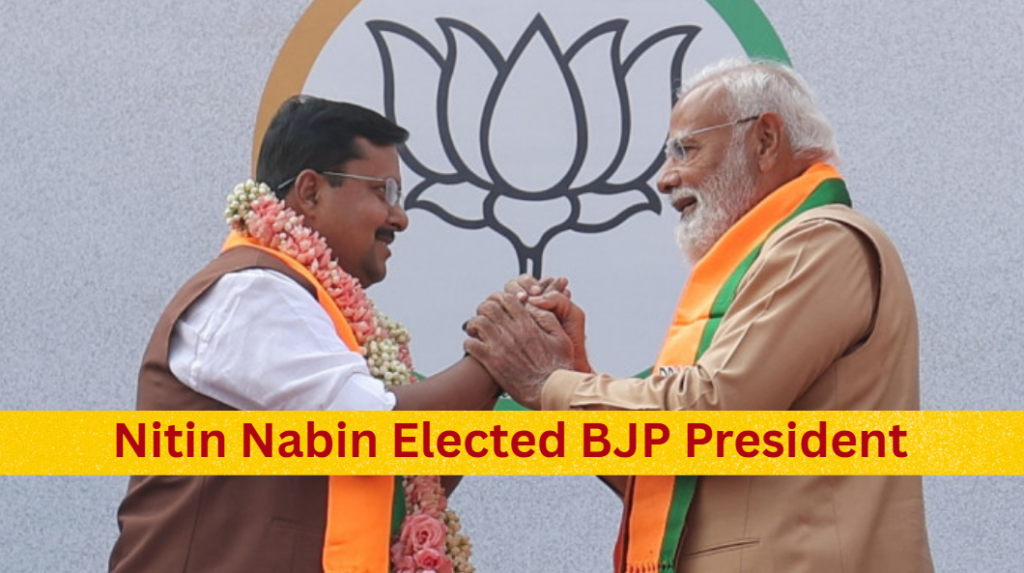
One of the most remarked-upon moments of the BJP President Election was Modi publicly positioning himself as a party worker, underscoring the BJP’s organisational culture shaped by RSS values. Senior leaders contrasted this with opposition parties, arguing that the BJP prioritises institutional respect over personality-driven politics.
Nitin Nabin, in his acceptance speech, paid tribute to former BJP stalwarts, including Atal Bihari Vajpayee and L.K. Advani, crediting their “sacrifice and discipline” for building the world’s largest political party.
Focus on Youth and First-Generation Politicians
A key organisational goal outlined during the event was the creation of one lakh new leaders — particularly those without political family backgrounds. Party sources say this initiative aims to deepen grassroots engagement and ensure ideological training for future leaders.
“This is not about numbers alone, but about nurturing commitment and integrity,” a senior BJP office-bearer said, describing the programme as central to Nabin’s presidency.
Security, Ideology and Political Messaging
Modi also touched upon internal security challenges, referring to the declining influence of Left-wing extremism while warning against what he described as “urban and globalised radical networks”. He urged party workers to intensify outreach on national culture, history, and constitutional values.
Analysts note that such messaging is likely to shape the BJP’s political narrative in the coming years, particularly as the party sharpens its ideological positioning ahead of future elections.
What the Nitin Nabin Era Means for BJP
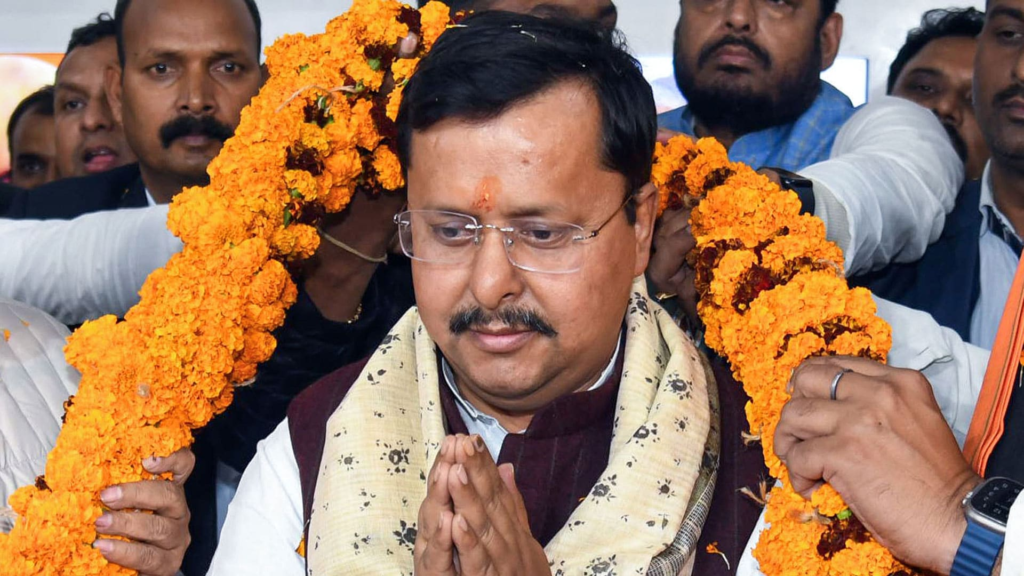
The BJP President Election culminating in Nitin Nabin’s appointment marks both continuity and change. While the party reiterates its allegiance to Prime Minister Modi’s leadership and RSS-guided ideology, it also signals a generational transition aimed at sustaining political dominance beyond immediate electoral cycles.
As the BJP looks towards 2029 and the broader 2047 vision, Nabin’s presidency will be closely watched for how effectively it balances organisational discipline, youth mobilisation, and evolving political challenges. Faces may change, but for the BJP, the core idea remains constant.
FAQs | BJP President Election
Q1: Who is the new BJP national president?
A: Nitin Nabin has been appointed as the new national president of the BJP.
Q2: Where did the BJP president election ceremony take place?
A: The ceremony was held at the BJP headquarters in New Delhi.
Q3: Why is Nitin Nabin’s appointment significant?
A: His elevation reflects the BJP’s push towards younger leadership and long-term planning for 2047.
Q4: What did PM Modi say about party leadership?
A: Modi said that in organisational matters, the BJP president is his boss, highlighting internal discipline.
Q5: How does this impact BJP’s future strategy?
A: The move aligns with grooming next-generation leaders and expanding the party’s national footprint.
References
- Times of India: “From party worker to its president: Nitin Nabin becomes youngest BJP chief” – https://timesofindia.indiatimes.com/india/from-party-worker-to-president-nitin-nabin-takes-charge-as-youngest-bjp-chief-10-things-to-know-about-new-bjp-president/articleshow/117099999.cms
- Economic Times: “Nitin Nabin takes charge as BJP chief, becomes youngest saffron party chief” – https://economictimes.indiatimes.com/news/politics-and-nation/nitin-nabin-formally-takes-charge-as-bjp-chief-becomes-youngest-saffron-party-chief/articleshow/117100000.cms
- News on AIR: “BJP appoints Nitin Nabin as New National Party President” – https://www.newsonair.gov.in/bjp-appoints-nitin-nabin-as-new-national-party-president-pm-shows-confidence-in-his-leadership/