 Digital Team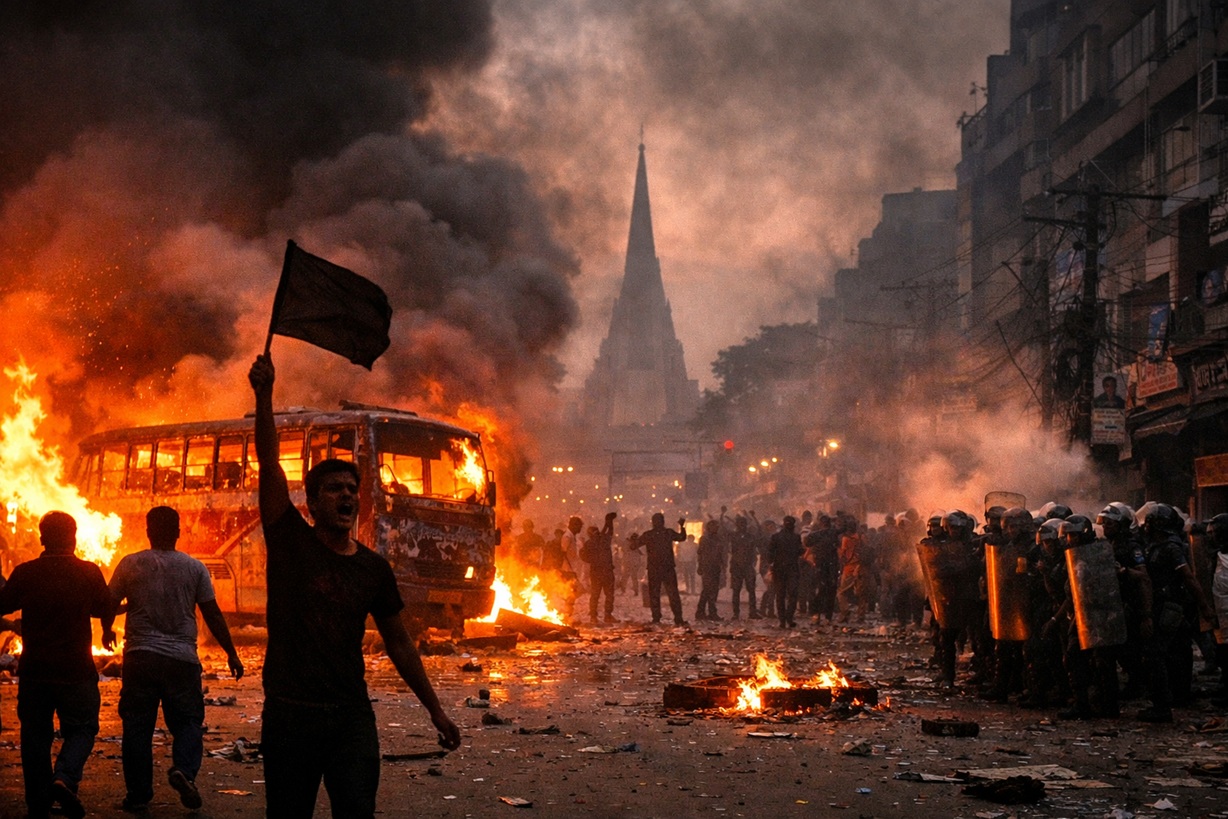
Something deeply unsettling is unfolding in Bangladesh.
Not quietly. Not gradually. But violently, visibly, and now—with global consequences.
The Bangladesh violence crisis has entered a phase that diplomats, human rights groups, and security agencies are no longer willing to ignore. Children have died in brutal attacks. Political opponents are being hunted. Media houses are burning. And foreign embassies are issuing urgent warnings.
If this feels sudden, it isn’t.
It’s been building—week by week, clash by clash.
A Red Flag Moment: US Issues Immediate Exit Advisory
One development sent shockwaves through diplomatic circles.
The United States issued a travel advisory urging its citizens to leave Bangladesh immediately, citing escalating violence and unpredictable security conditions.
This isn’t routine language.
Such advisories are issued only when intelligence agencies believe things could spiral fast.
When Washington tells its citizens to leave, it’s no longer just “internal unrest.” It’s a regional concern.
Children Burned Alive: The Incident That Broke the Silence
In Lakshmipur, a horrifying incident stunned even those used to bad news.
What happened?
- The house of a BNP leader, Bilal Hossain, was reportedly locked from the outside
- The building was set on fire while family members were inside
- One child was killed
- Three others suffered critical burns
This was not a Hindu–Muslim incident.
The victims were Muslims, including children.
That’s what makes it more disturbing.
This wasn’t communal spillover.
It was political violence crossing every moral line.
Opposition Leaders Under Attack
Reports from multiple districts suggest a pattern:
- BNP offices vandalized
- Party workers targeted
- Leaders attacked or forced underground
Political analysts say this reflects a dangerous narrowing of democratic space, where dissent is no longer debated—but punished.
Media Under Siege: When Journalism Becomes a Target
Perhaps the clearest sign of chaos?
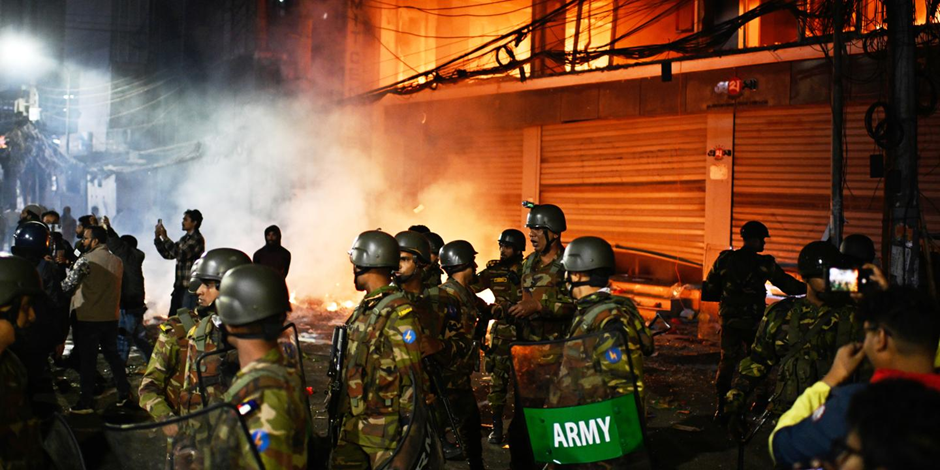
Newsrooms are burning.
- Offices of The Daily Star
- Premises linked to Prothom Alo
- Journalists reportedly forced to flee through back exits
Equipment looted.
Files stolen.
Buildings torched.
Ask yourself one question:
If a movement fears journalists, what is it hiding?
India Steps In: Army Chiefs Speak Directly
As tensions rose, India’s Army Chief spoke directly with Bangladesh Army Chief General Waker-Uz-Zaman.
According to official briefings:
- Bangladesh assured safety of Indian citizens and assets
- Concerns were raised over threats to the Indian High Commission in Dhaka
- Border security monitoring has reportedly increased
Diplomatic language aside, the message was clear:
Instability will not be ignored.
Human Rights Groups Break Their Silence
International watchdogs rarely speak in unison—but now they are.
Statements have come from:
- Human Rights Watch
- Amnesty International
- United Nations officials
Their message?
Violence must stop. Accountability is non-negotiable.
When such bodies intervene publicly, it signals credible concern over systemic breakdowns.
Who Benefits From the Chaos?
This is the question investigators always ask.
- A political leader is shot after announcing electoral ambitions
- Violence erupts after his death
- Elections remain uncertain
- Extremist elements gain street power
Whether coincidence or coordination, analysts agree on one thing:
Instability is empowering the most radical actors.
Minorities and Free Thought Under Threat
Separate incidents have raised alarm about:
- Attacks on Hindu communities
- Allegations of mob violence over blasphemy claims
- Cultural centers vandalized
- Artists and intellectual spaces shut down
History shows this pattern clearly:
When mobs dictate morality, minorities pay first—and free speech disappears next.
Why the Bangladesh Violence Crisis Matters Beyond Borders
This isn’t just Bangladesh’s problem.
- India faces border security risks
- South Asia’s stability is threatened
- Extremist networks exploit chaos
- Refugee pressures may rise
- Trade and diplomacy take a hit
In an interconnected region, one burning house can ignite the neighborhood.
FAQs: Bangladesh Violence Crisis
❓ Why did the US issue a travel advisory?
Because intelligence inputs suggested escalating, unpredictable violence and risks to foreigners.
❓ Are minorities being targeted?
Yes, multiple credible reports indicate attacks on religious and political minorities.
❓ Is this linked to elections?
Many analysts believe the unrest is connected to power struggles ahead of uncertain elections.
❓ Is India likely to intervene?
Diplomatically and defensively—yes. Militarily—only if direct threats escalate.
Also Read:
References: