 Digital Team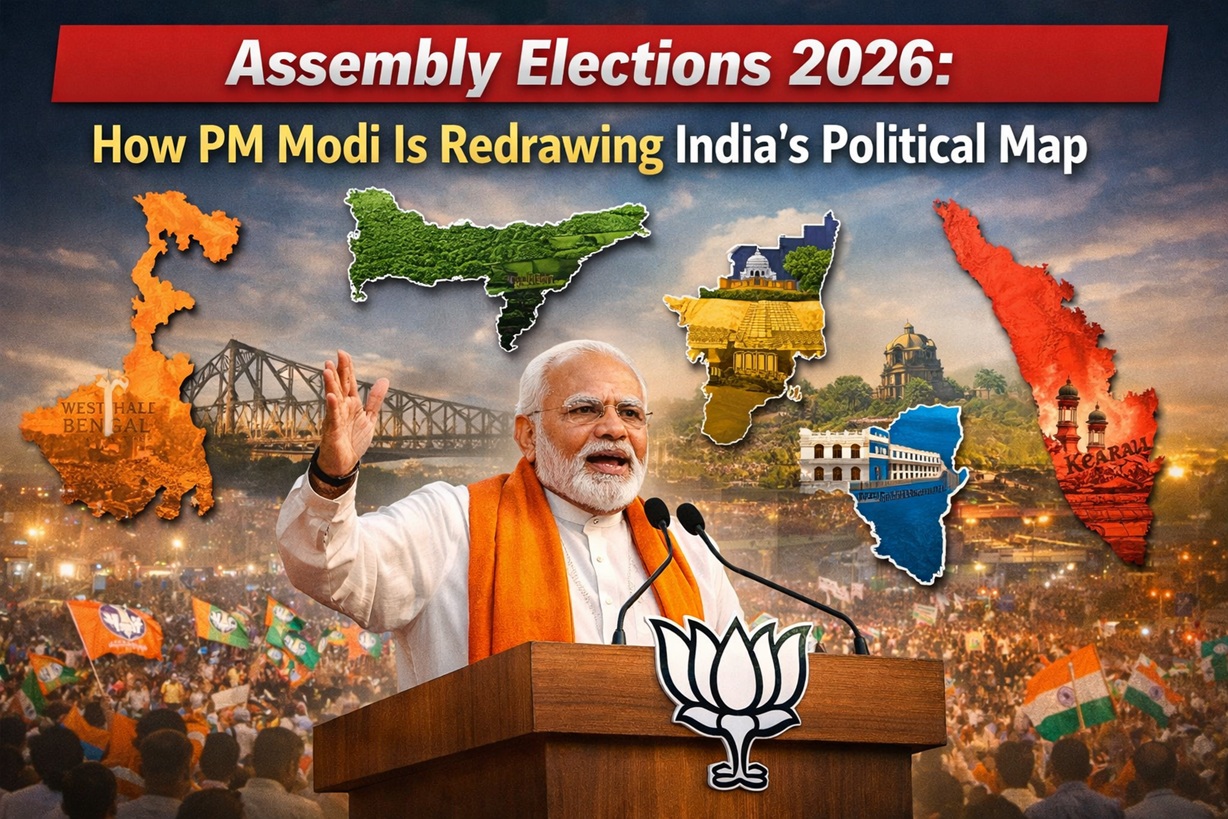
From Bengal to Tamil Nadu, the 2026 Assembly elections emerge as a high-stakes political test, with Prime Minister Narendra Modi’s strategy reshaping regional battlegrounds across five key states and Union Territories.
As Assembly Elections 2026 approach in West Bengal, Assam, Tamil Nadu, Kerala and Puducherry, the BJP sharpens its pitch of leadership, nationalism and governance to challenge entrenched regional forces.
The Assembly Elections 2026 will be held in West Bengal, Assam, Tamil Nadu, Kerala and Puducherry, covering nearly 17% of India’s population and setting the tone for national politics ahead of the 2029 Lok Sabha polls. With the Bharatiya Janata Party (BJP) mounting an aggressive, Modi-centric campaign, these elections are shaping up as a contest of leadership narratives, governance models and ideological influence.
Assembly Elections 2026: PM Modi’s Strategy Across Five States
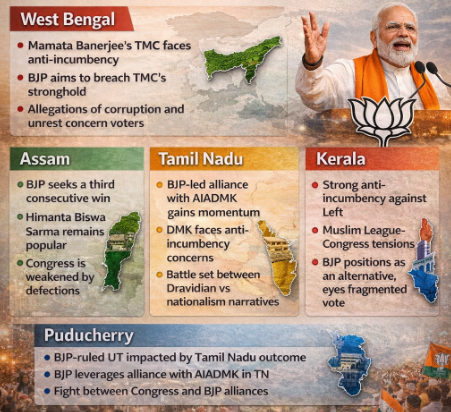
The BJP’s approach to the Assembly Elections 2026 reflects a calibrated mix of central leadership projection, local alliances and targeted messaging. Party strategists view the five-state contest not merely as a regional exercise, but as a litmus test of Prime Minister Narendra Modi’s enduring appeal beyond the Hindi heartland.
Senior BJP leaders indicate that campaign themes will revolve around development delivery, national security, welfare outreach and what the party calls “political stability versus fragmented governance”.
West Bengal: Can the BJP Breach the TMC Fortress?
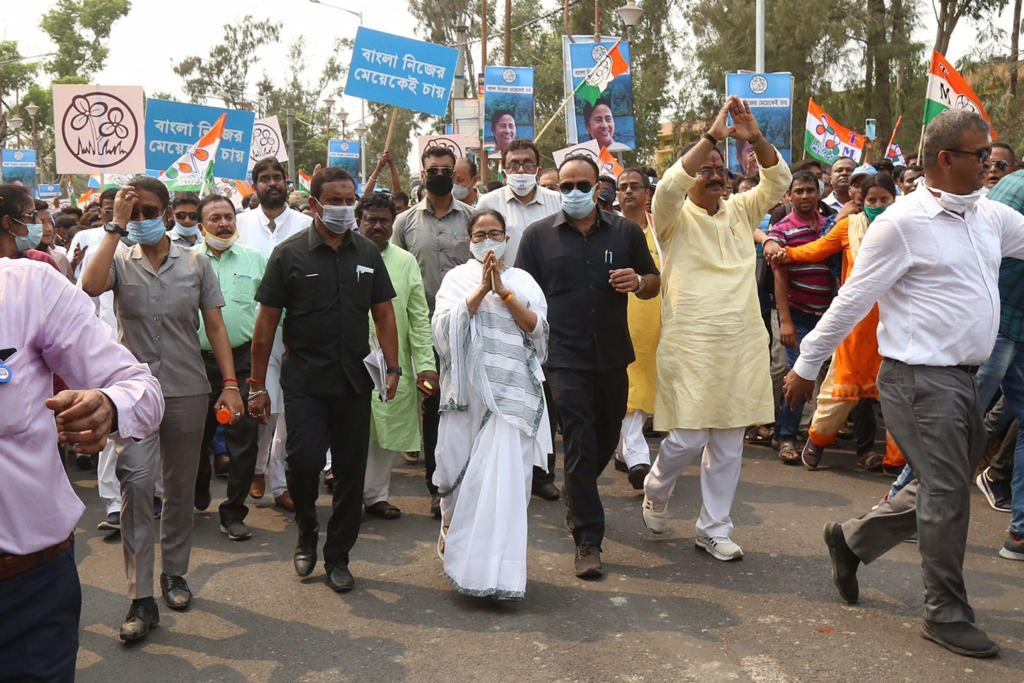
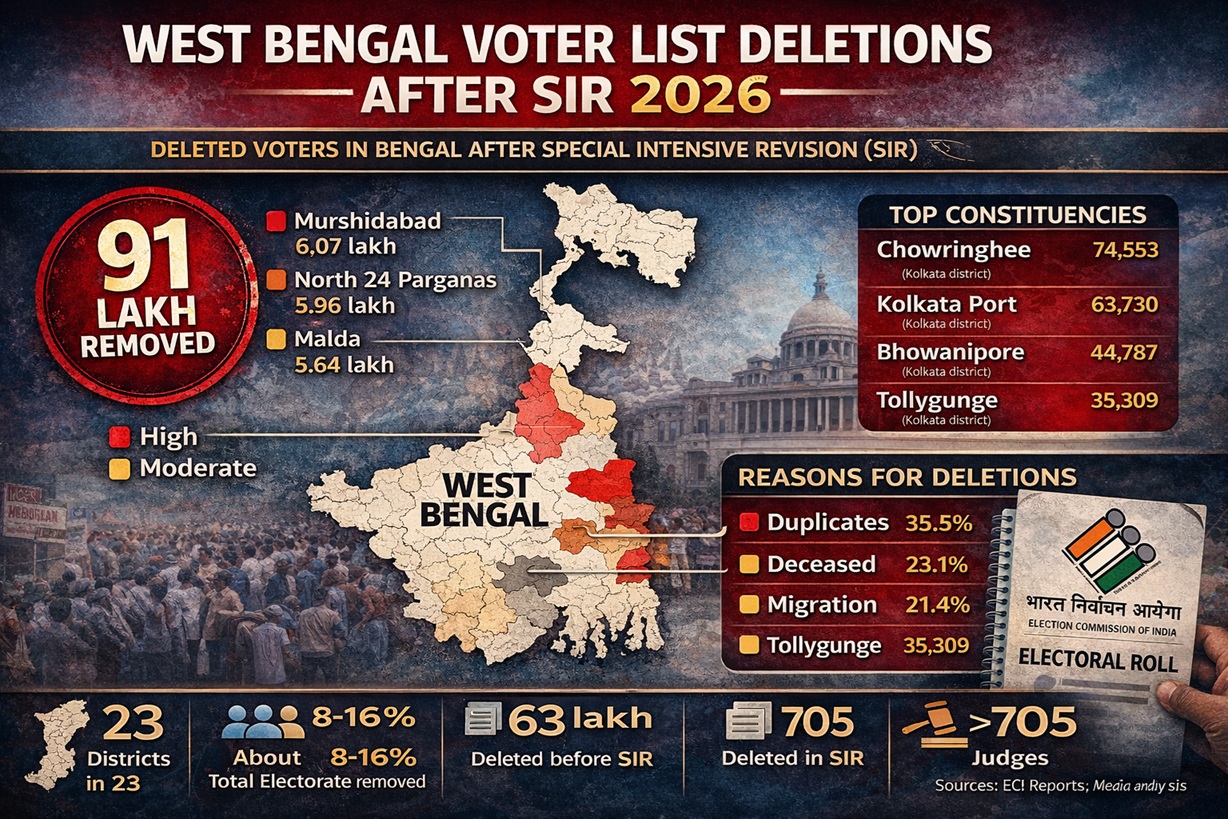
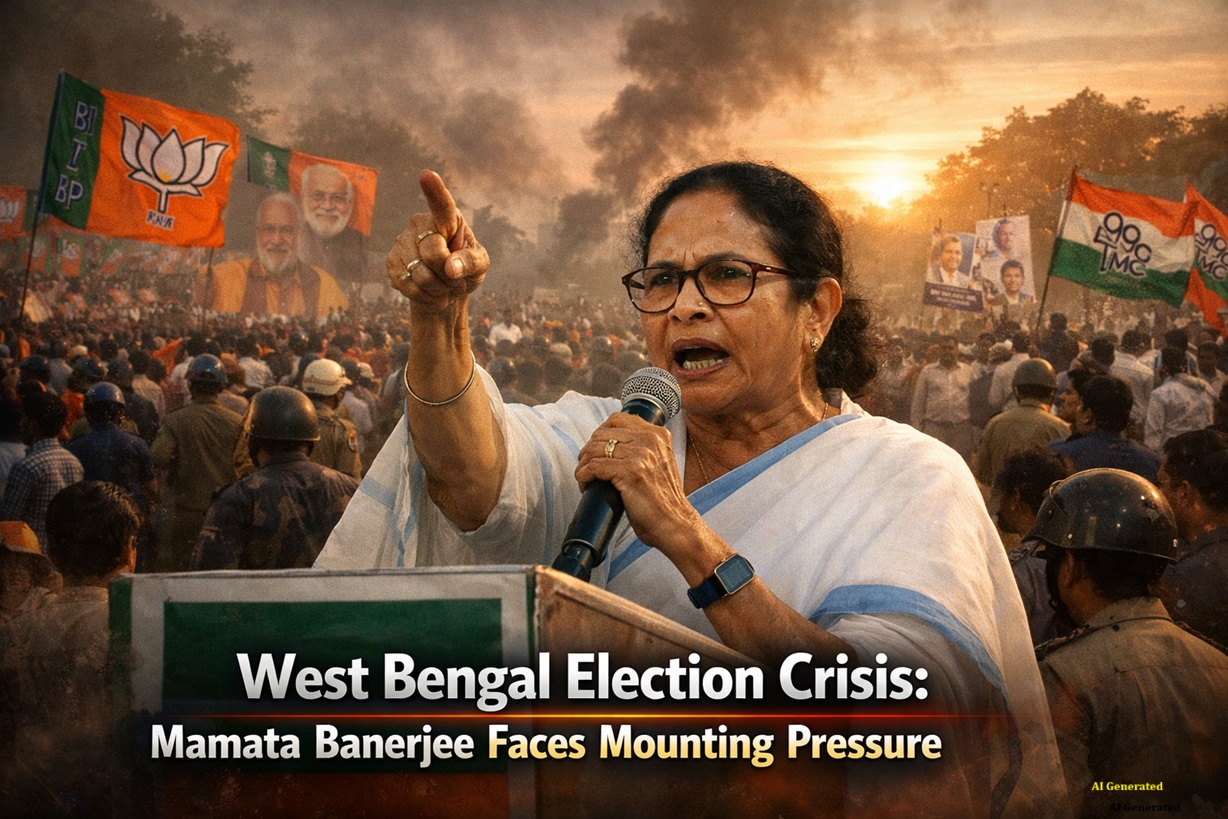
In West Bengal, the political spotlight remains firmly on Chief Minister Mamata Banerjee, whose Trinamool Congress (TMC) has dominated state politics for over a decade.
However, recent by-election trends, internal dissent within the TMC, and allegations of corruption have given the BJP fresh ammunition. Party leaders believe the Assembly Elections 2026 could mark a turning point if anti-incumbency consolidates.
The BJP plans to foreground issues such as law and order, alleged appeasement politics, and governance accountability, while leveraging Modi’s popularity to counter Banerjee’s strong regional persona.
Assam: BJP Eyes a Hat-Trick Under Himanta Biswa Sarma
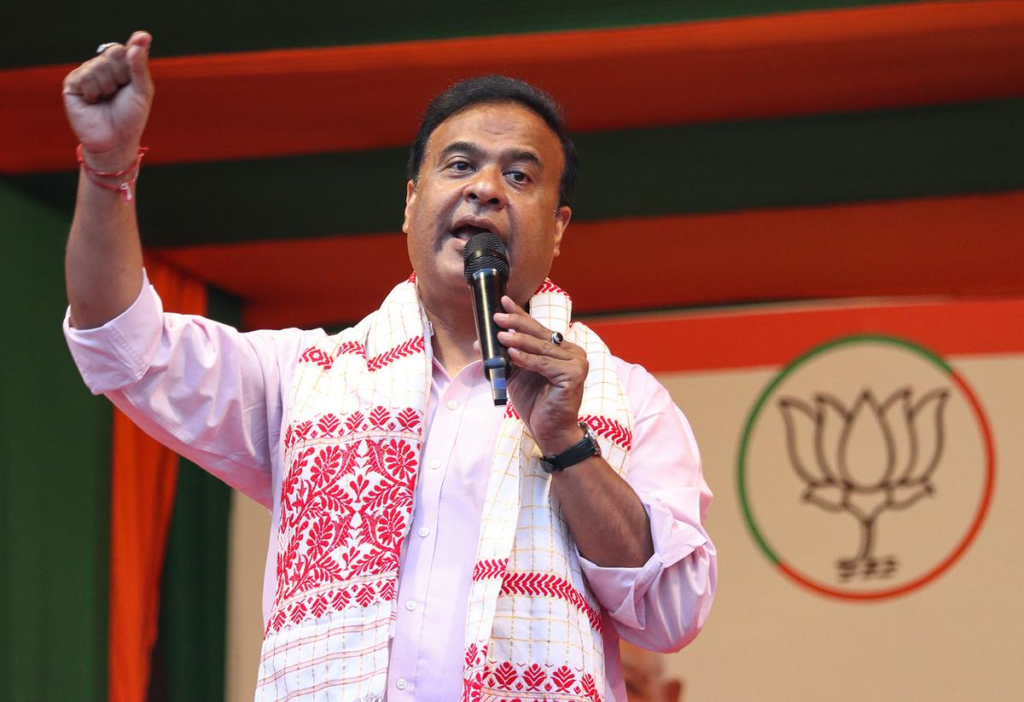
In Assam, the BJP enters the Assembly Elections 2026 from a position of relative strength. Chief Minister Himanta Biswa Sarma remains one of the party’s most influential regional leaders, credited with consolidating the BJP’s base across ethnic and regional lines.
The Congress, once dominant in the state, appears organisationally weak, while regional parties have struggled to regain momentum. Political observers note that a third consecutive BJP term in Assam would reinforce Modi’s narrative of political continuity in the Northeast.
Kerala: Anti-Incumbency Opens a Narrow Window
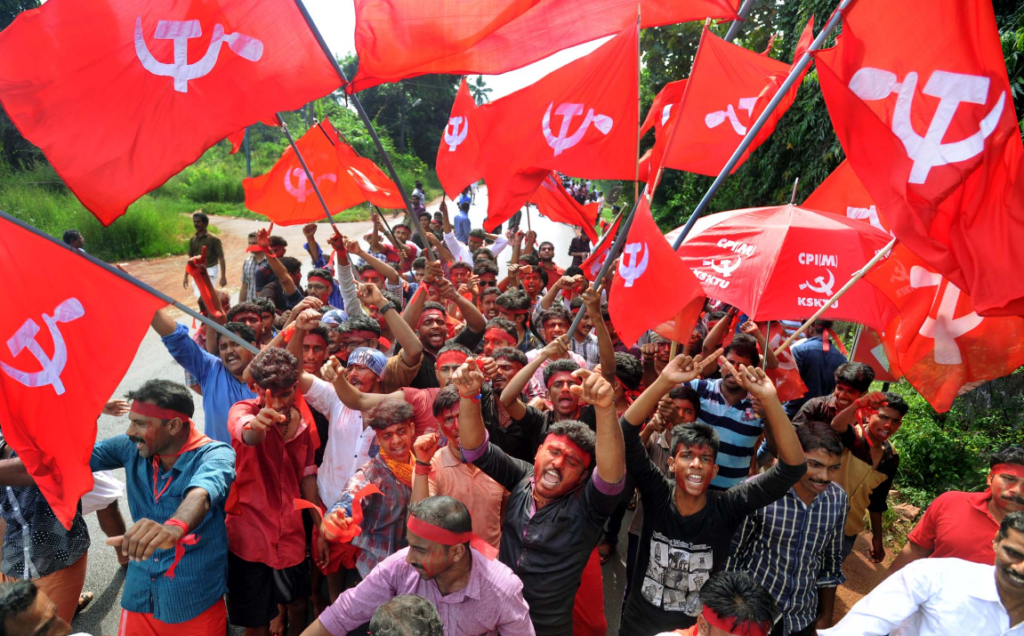
Kerala presents a more complex challenge. The Left Democratic Front (LDF), led by the Communist Party of India (Marxist), faces visible anti-incumbency after a second consecutive term.
The Congress-led United Democratic Front (UDF) remains the principal challenger, but internal differences—particularly with the Indian Union Muslim League—have created strategic gaps. BJP leaders believe this fragmentation could help them improve their vote share in the Assembly Elections 2026, even if a full-scale breakthrough remains difficult.
The party’s focus here is on youth outreach, development politics and projecting itself as a “third alternative” to the Left and Congress.
Tamil Nadu: BJP-AIADMK Axis Gains Ground
In Tamil Nadu, the BJP’s alliance strategy assumes critical importance. The party has been working to strengthen ties with the All India Anna Dravida Munnetra Kazhagam (AIADMK), positioning the coalition as a credible challenger to the ruling Dravida Munnetra Kazhagam (DMK).
Political analysts suggest that Modi’s national appeal, combined with a regional ally’s grassroots presence, could help the BJP-led front make significant gains in the Assembly Elections 2026. The party is also attempting to reframe the Dravidian-versus-national narrative by emphasising development and welfare delivery.
Puducherry: A Spillover Effect from Tamil Nadu
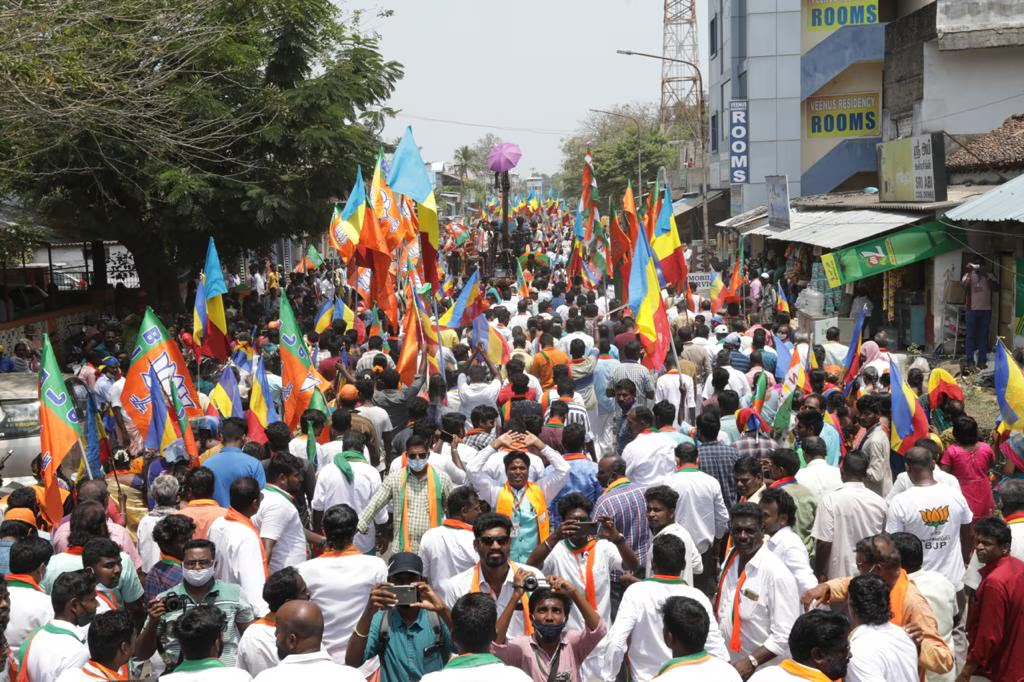
The political dynamics in Puducherry are closely linked to developments in Tamil Nadu. Having previously formed the government in the Union Territory, the BJP is keen to retain its influence.
Strategists expect the Assembly Elections 2026 outcome in Puducherry to be shaped by alliance arithmetic and voter sentiment in neighbouring Tamil Nadu, making it a bellwether contest for the BJP’s southern ambitions.
Why These Elections Matter Nationally
The Assembly Elections 2026 are being closely watched as a barometer of Modi’s ability to expand the BJP’s footprint in non-traditional regions. Success in even two or three of these states would significantly strengthen the party’s national narrative ahead of 2029.
More importantly, the elections underscore a broader ideological contest—between regional identity politics and a centralised leadership model anchored in Modi’s persona.
A High-Stakes Political Test
As campaigning intensifies, the Assembly Elections 2026 promise to redefine political equations across five diverse states. Whether the BJP can translate Modi’s national popularity into regional victories remains the central question. What is clear, however, is that these elections will shape not just state governments, but the trajectory of Indian politics over the next decade.
FAQs: Assembly Elections 2026
Q: Which states will vote in the Assembly Elections 2026?
A: West Bengal, Assam, Tamil Nadu, Kerala and Puducherry.
Q: Why are the Assembly Elections 2026 significant?
A: They cover nearly 17% of India’s population and are seen as a precursor to the 2029 Lok Sabha polls.
Q: Is the BJP confident of winning all five states?
A: The BJP is optimistic but faces strong regional parties, especially in West Bengal and Tamil Nadu.
Q: How important is PM Modi’s role in these elections?
A: Modi remains the BJP’s central campaign face, especially in states where the party lacks strong local leadership.
Q: Could alliances decide the outcome?
A: Yes, particularly in Tamil Nadu and Puducherry, alliance dynamics will be crucial.
References