 Digital Team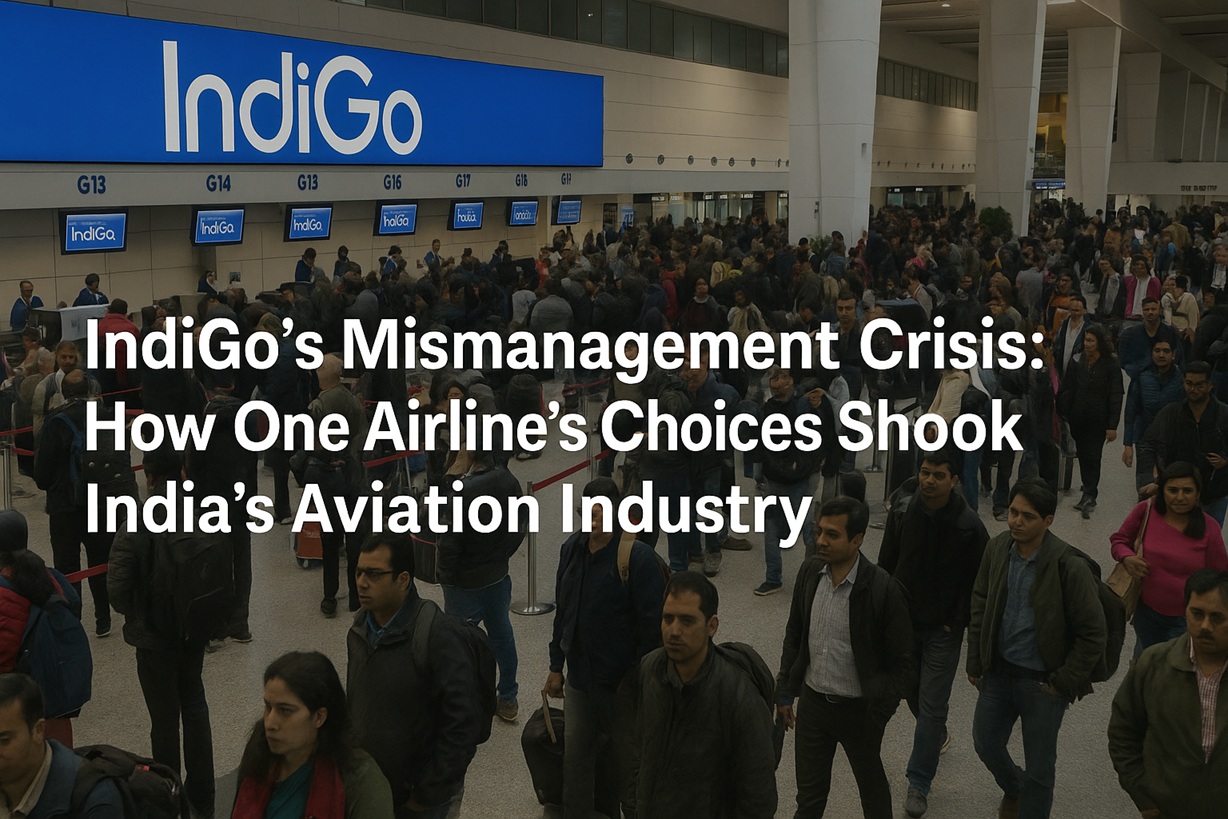
IndiGo’s flight chaos in December 2025 exposed a deeper mismanagement crisis. From DGCA fatigue rules to airport gridlocks, here’s how one airline shook India’s aviation industry.
India’s most profitable airline is suddenly its biggest aviation headache. IndiGo’s December 2025 operational meltdown — marked by mass delays, chaotic cancellations, and regulatory heat from DGCA — has exposed how a hyper-lean business model can backfire when scaled without safety and staffing buffers.
Once celebrated for punctuality and discipline, IndiGo’s planning failures under new pilot fatigue norms triggered a snowball effect, jamming airports, rattling stock markets, and disrupting nationwide travel at peak holiday season.
What Went Wrong?
The crisis began when new DGCA fatigue rules took effect on 1 November 2025. The regulations mandated stricter pilot rest periods to reduce safety risks.
Instead of proactively hiring, adjusting schedules, or building contingency, IndiGo continued operating with a “maximum utilisation, minimum manpower” strategy. As duty limits kicked in mid-flight schedules:
- Pilots exceeded permitted hours
- Flights couldn’t legally depart
- Aircraft piled up on tarmac
- Airport parking bays got blocked
- Thousands of passengers were stranded
IndiGo later admitted “planning gaps” — a rare confession from a market leader that is responsible for over 50% of India’s domestic flights.
A Pattern of Ignoring Warning Signs
This crisis didn’t come from nowhere. Recent regulatory actions show a systemic pattern of shortcuts:
| Year | Violation | Penalty |
| 2023 | 4 tail-strike safety incidents; training lapses | ₹30 lakh |
| 2025 | Use of uncertified simulators for trainee pilots | ₹40 lakh |
| Nov 2025 | Instrument procedure violation at Udaipur | ₹20 lakh |
Add that to labour unrest, fatigue concerns and passenger mistreatment cases, and a consistent theme emerges: IndiGo scaled faster than it strengthened its compliance culture.
Why India’s Entire Aviation System Suffered
Because IndiGo controls half of India’s commercial skies, its meltdown created industry-wide collateral damage:
- Airports like Pune and Delhi ran out of parking bays
- Other airlines faced delays due to gridlock
- Tourism and corporate travel took a direct hit
- DGCA launched deeper probes into scheduling and fatigue norms
One airline’s mismanagement exposed national infrastructure vulnerabilities.
What This Means for Passengers & Airlines
The industry is now at an inflection point:
For IndiGo
- Expand staffing and simulator capacity
- Ensure compliance-driven scheduling
- Improve disability and disruption support
- Communicate transparently during crises
For Regulators
- Tighten fatigue enforcement
- Reduce reliance on a single dominant carrier
- Mandate real-time transparency on cancellations
For Rivals
- This crisis opens a market window for Air India, Air India Express, Akasa, SpiceJet and others to rebuild trust through reliability.
Time to Rebuild Trust
IndiGo’s meltdown proves that efficiency without resilience becomes a national aviation risk. The airline that once symbolised punctual precision must now reinvent itself — not just through better schedules, but through better governance, safety culture and empathy for passengers and employees alike.
If it fails to learn, India’s aviation story will be rewritten without its biggest player.