 Digital Team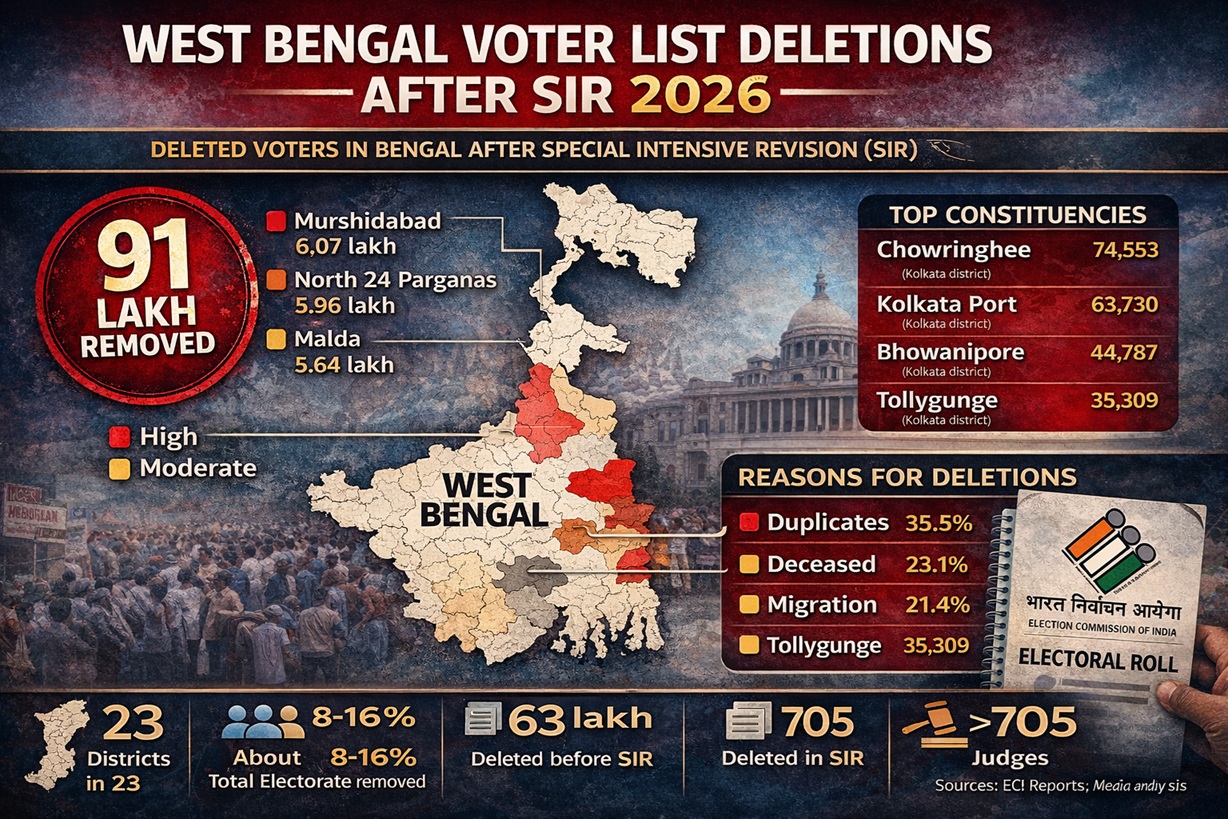
Massive voter list revision in West Bengal raises political stakes ahead of Assembly polls
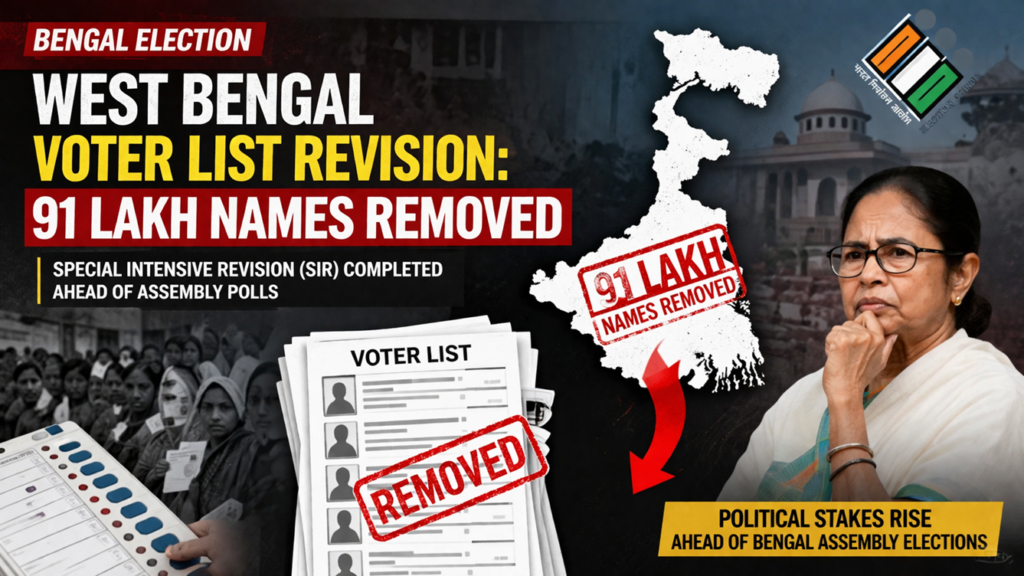
In a major electoral development, the West Bengal voter list revision has led to the removal of nearly 91 lakh names following the completion of the Special Intensive Revision (SIR) process. Conducted under judicial oversight and concluded at midnight on Monday, the exercise is expected to significantly impact the state’s political landscape, raising concerns within the ruling establishment led by Mamata Banerjee.
West Bengal Voter List Revision: What Happened?
The West Bengal voter list revision marks one of the largest electoral roll clean-up exercises in recent years. The Special Intensive Revision (SIR), carried out under the supervision of the Election Commission, aimed to eliminate duplicate, shifted, deceased, and ineligible voters.
Officials confirmed that:
- Approximately 91 lakh names have been deleted
- The revision process was completed after a judicial directive
- The deadline concluded at midnight on Monday
- The updated electoral roll is expected to be published shortly
Sources indicate that the exercise was part of routine electoral maintenance but assumed greater significance due to its scale and timing ahead of Assembly elections.
Why Were 91 Lakh Names Removed?
Key Reasons Behind Deletions
Authorities cite multiple factors behind the removal of names:
- Duplicate entries across constituencies
- Deceased voters not previously removed
- Migration-related deletions (interstate or within districts)
- Incorrect or unverifiable records
- Failure to respond to verification notices
Election officials maintain that the revision adheres strictly to guidelines laid down by the Election Commission of India (ECI).
Political Implications of West Bengal Voter List Revision
The West Bengal voter list revision has triggered sharp political reactions, particularly from the ruling Trinamool Congress (TMC).
Concerns Raised by Mamata Banerjee
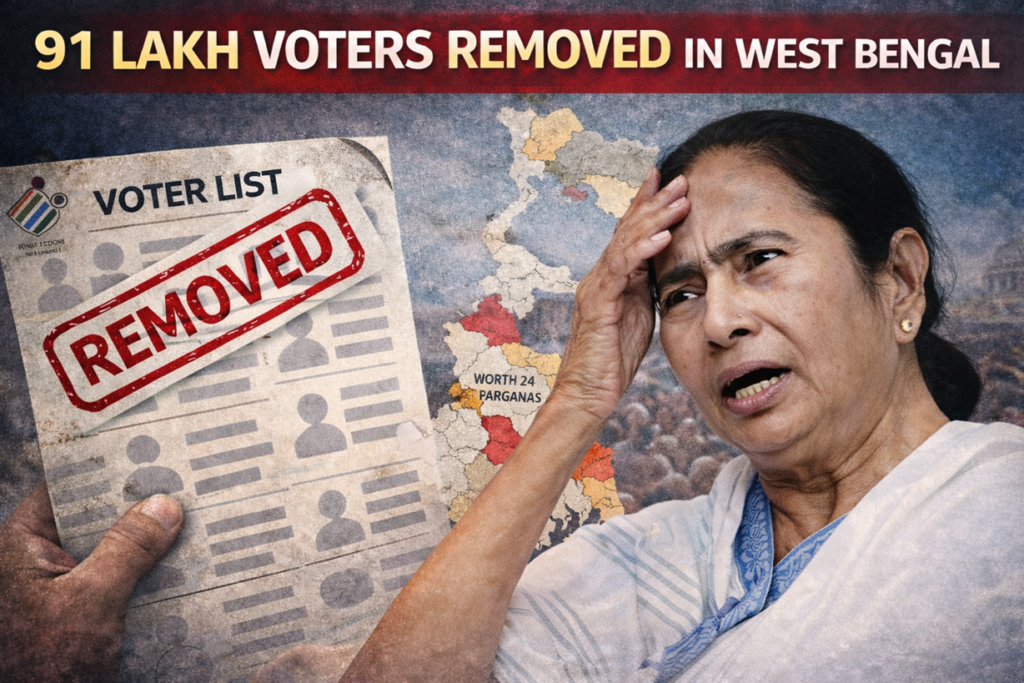
Chief Minister Mamata Banerjee has reportedly expressed concern over the scale of deletions, fearing potential disenfranchisement of genuine voters.
Political observers note:
- The deletions could impact electoral arithmetic in key constituencies
- Opposition parties may gain an advantage if voter demographics shift
- Allegations of targeted removals could intensify political tensions
While no formal statement has confirmed irregularities, the development is expected to become a major campaign issue.
Election Commission’s Stand
The Election Commission of India has defended the process, stating that:
- The revision was conducted in a transparent and systematic manner
- Due process was followed, including notices and verification
- Citizens have the option to reapply or appeal deletions
Officials emphasised that such revisions are crucial to ensure free and fair elections.
Impact on Upcoming Assembly Elections
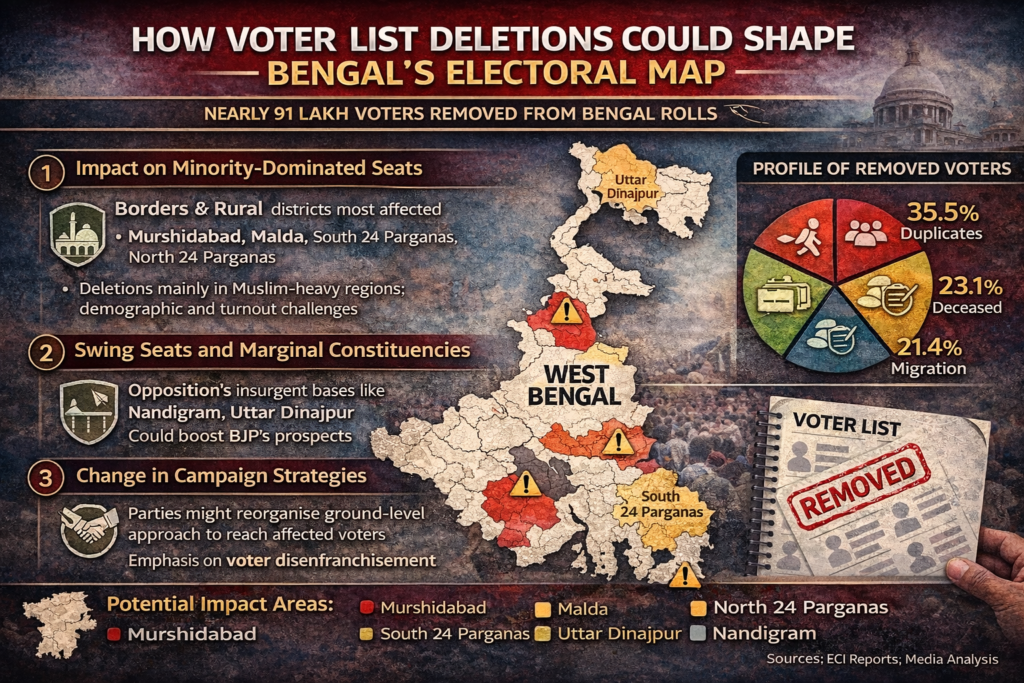
Electoral Landscape May Shift
The removal of 91 lakh names could significantly alter:
| Factor | Potential Impact |
| Voter turnout | May decline in affected regions |
| Constituency balance | Could shift margins in close seats |
| Political narratives | Likely to dominate campaign discourse |
| Legal scrutiny | Possible increase in election-related litigation |
Analysts suggest that the West Bengal voter list revision may influence both urban and rural constituencies, depending on the distribution of deletions.
Legal and Judicial Context
The completion of the revision followed a judicial order, underscoring the legal oversight involved in electoral processes. Experts highlight that:
- Courts often intervene to ensure electoral integrity
- Large-scale revisions require strict compliance mechanisms
- Legal challenges may arise if discrepancies are found
West Bengal Voter List Revision and What Lies Ahead
The West Bengal voter list revision has emerged as a pivotal development ahead of Assembly elections, with nearly 91 lakh deletions reshaping the electoral landscape. While authorities defend the process as necessary for maintaining clean electoral rolls, political concerns and voter grievances may continue to surface. The coming weeks will determine whether this revision strengthens electoral integrity or fuels further controversy.
FAQ Section
Q: What is the West Bengal voter list revision?
A: It is a Special Intensive Revision (SIR) process to update electoral rolls by removing invalid entries.
Q: Why were 91 lakh names removed?
A: Due to duplication, deaths, migration, and unverifiable records.
Q: Can removed voters reapply?
A: Yes, affected voters can file claims for re-inclusion through the Election Commission.
Q: Will this affect Assembly elections?
A: Yes, it may influence voter turnout and constituency dynamics.
Q: Who conducted the revision?
A: The Election Commission of India under judicial supervision.
References