Digital Team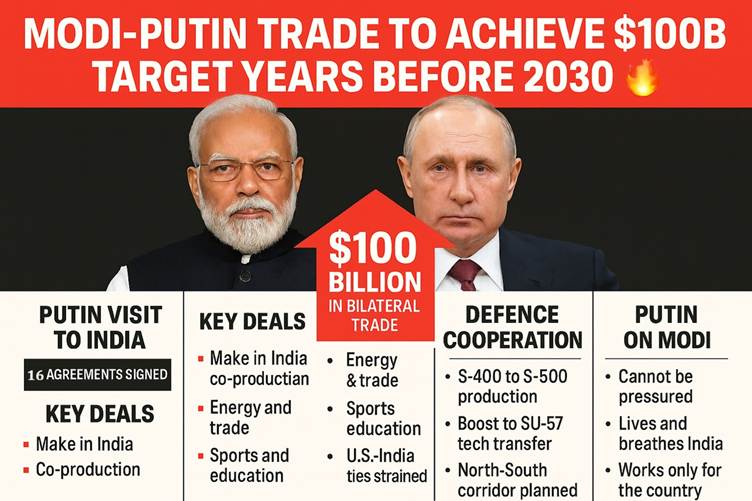
Modi–Putin strike mega defence, trade and energy deals. India–Russia target $100B trade before 2030. Why is Washington worried? Must-read analysis.
A Two-Hour Private Meeting That Could Rewire Global Power
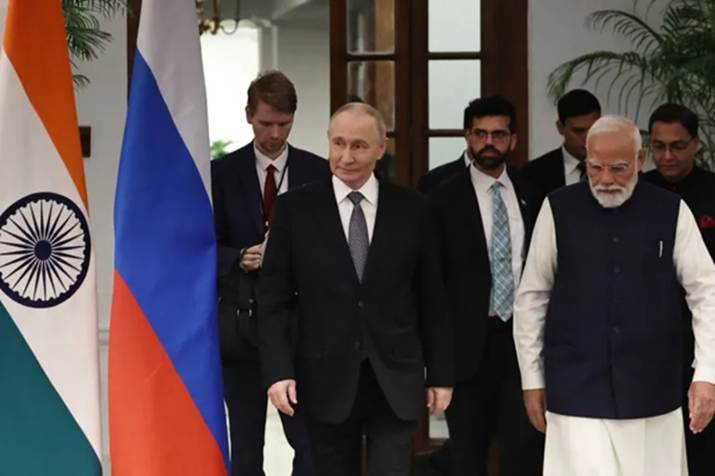
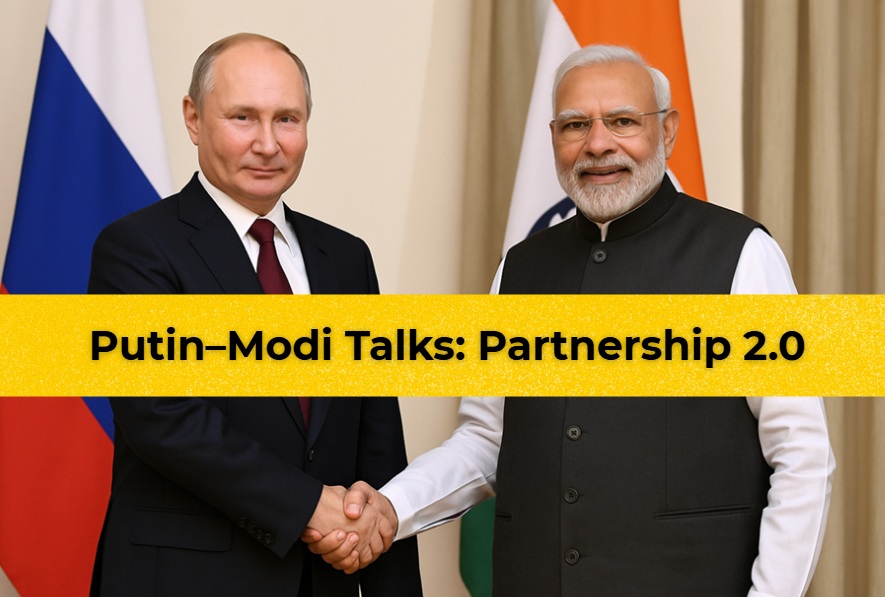
India and Russia just announced a shocking upgrade in bilateral trade. Prime Minister Narendra Modi and President Vladimir Putin say the $100 billion India–Russia target will be met well before 2030.
But here’s the twist: this announcement comes right after the U.S. rejected a Ukraine peace proposal, sparking global attention. What exactly is India signaling?
16 Big Deals — and the Secret Ones We Aren’t Allowed to See
During Putin’s New Delhi visit, 16 agreements were signed, covering:
- Defence co-production & technology transfers
- Sports and educational partnerships
- Energy, logistics and trade expansion
- Strengthening Make in India manufacturing
Officials hinted more deals were signed behind closed doors, not made public — yet.
Key Defence Takeaways
- S-400 systems to be produced in India
- India eyes S-500 and Su-57 fighter jet tech
- Make in India becomes the backbone of defence imports
- BrahMos cooperation to expand to new markets
Source references: Ministry of External Affairs, SIPRI Military Database, Defense Ministry briefings.
Was This Visit a Direct Message to the United States?
Foreign policy analysts are calling Putin’s trip a strategic slap to Washington. Why?
🔹 U.S. wanted Russia isolated. India just did the opposite.
🔹 India refused Western pressure to stop buying Russian oil.
🔹 Trade tariffs from Washington have failed to intimidate New Delhi.
Putin’s statement sounded like a warning shot to the West:
“We will neither bow down nor stop.” — Vladimir Putin
And about Modi:
“He cannot be pressured. He works only for India.” Rarely does Putin praise a leader this openly — and strategically.
Europe Is Also Pivoting — Following Modi’s Playbook?
While Putin met Modi in Delhi, French President Emmanuel Macron was busy striking deals with China. Europe seems to be testing the same policy India uses:
Engage all sides. Never take orders.
Analysts say Europe finally has the “courage” India displayed earlier by:
- Ignoring American warnings on Russia
- Continuing oil imports despite sanctions
- Strengthening BRICS diplomacy
India’s foreign policy signals are influencing global strategy.
Source: Council on Foreign Relations, European Council Briefing.
Tectonic Shift: Weapons for Use Against China and Pakistan
Russia agreed to future defence production meant for deployment against China and Pakistan, yet:
- China is silent.
- Pakistan cannot protest without risking diplomatic backlash.
Why this silence matters:
Russia is the only major power providing weapon tech to India despite knowing the target theatre.
Putin confirmed the North–South Transport Corridor will be completed at any cost, linking Mumbai to Central Asia and Europe via Iran.
Panic Across the Seven Seas: U.S. Politics Enter the Scene
According to U.S. media, Donald Trump’s isolation strategy for Russia is collapsing, and Modi–Putin ties may be one reason.
After India–Russia announcement:
- Trump’s tone toward India softened
- Republican lawmakers questioned U.S. policy in Pakistan
- U.S. sanctions talk turned quiet overnight
Unrest is visible not just in Washington — Pakistan’s political crisis is now linked to foreign dealmaking and U.S. silence, as Pakistani opposition claims American business interests block criticism of their government.
Modi–Putin: A Relationship Built on Sovereignty, Not Sympathy
Putin’s most striking words were not diplomatic — they were personal:
“Modi lives and breathes India. Every breath is for the country.”
He also drew a contrast with unnamed Western leaders focused on personal or family profits. The comment was seen in global media as a subtle attack on U.S. leadership and Pakistan’s politics.
Why Putin’s Praise Matters
- He almost never praises global leaders.
- Russia deals only where there is leverage or respect.
- His words carry geopolitical intent, not compliments.
Translation:
India is not a follower. It is an independent pole in a multipolar world.
Final Take: A New Global Order Has a Capital — and It’s Not Washington
The India–Russia dynamic has changed from buyer-seller to partner-strategist, shaving years off a $100 billion goal and pushing a sovereign, independent foreign policy. This isn’t just trade. It’s a global realignment led from New Delhi.

 Dr. Biswendu