Digital Team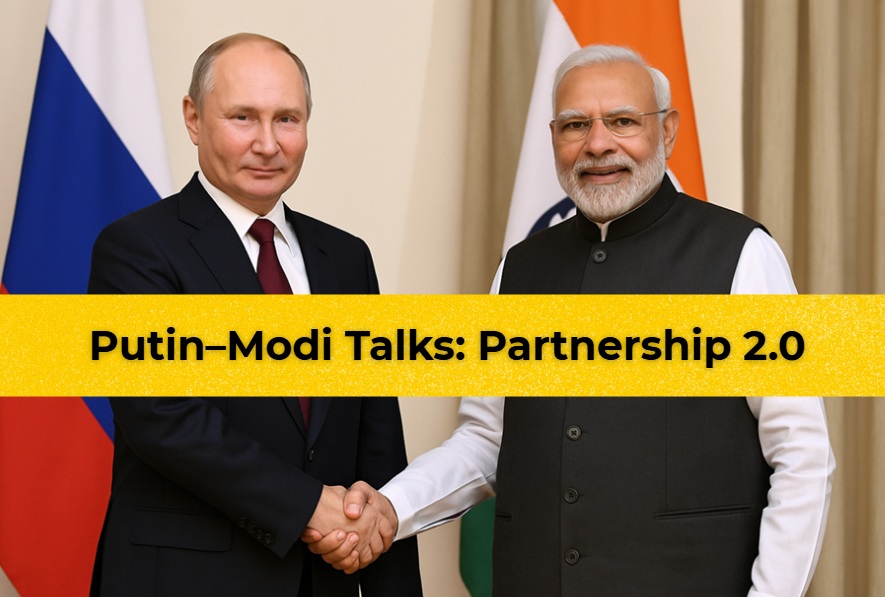
Russian President Vladimir Putin will arrive in New Delhi for the India–Russia Annual Summit, marking his first visit to India since the Ukraine war began in 2022. Invited by Prime Minister Narendra Modi, the visit is expected to push bilateral ties to what Putin has described as a “new qualitative level.”
The two leaders last met in person in September 2025 in Tianjin, on the sidelines of the SCO Summit. Their New Delhi meeting comes at a moment of intense global scrutiny, with Western governments openly expressing concerns about India’s evolving engagement with Moscow.
A Defiant Signal on Strategic Autonomy
Putin’s visit underscores India’s longstanding position: foreign policy is shaped by national interests, not external pressure. Despite sustained US and European criticism over India’s energy and defence cooperation with Russia, New Delhi has continued to pursue independent decisions.
India has repeatedly rejected Western demands to restrict oil purchases from Russia, framing the issue as an economic necessity for 1.4 billion citizens. The message is clear—India will source energy from the most affordable and reliable partners, be it Russia, Saudi Arabia, Iran, or others.
Defence Ties: From Procurement to Co-Development
Defence will remain at the core of the summit. Russia remains India’s largest arms supplier, and the partnership is evolving from buyer–seller dynamics to joint development and technology transfer.
Discussions are expected to include:
- Next-generation missile systems, including potential collaboration beyond the S-400 platform.
- Expansion of joint production initiatives such as BrahMos, which recently achieved a 3,500 km-range test, significantly boosting India’s strategic capabilities.
- New frameworks to increase local manufacturing of Russian defence technologies in India.
Such agreements align with India’s Make in India defence manufacturing strategy and its goal of becoming a net exporter of military hardware.
Energy, Nuclear and Currency Cooperation
Beyond defence, the summit will focus on:
- Long-term crude oil supply contracts at discounted rates.
- Civil nuclear cooperation, including new units under India’s existing reactor projects with Russian assistance.
- Settlement mechanisms in local currencies, a move aimed at reducing exposure to Western sanctions and dollar-centric trade barriers.
Putin’s recent remarks at a business forum highlighted Moscow’s intent to raise cooperation with India to a “qualitative new level”, hinting at deeper strategic and industrial integration.
Western Anxiety and Diplomatic Pressure
The geopolitical implications of Putin’s visit are not lost on Western capitals. Ahead of the summit, ambassadors of France, Germany, the UK, and the US issued joint statements in Indian media urging progress toward ending the Ukraine conflict.
New Delhi dismissed the intervention as “an unusual and unacceptable diplomatic practice”, reinforcing that third-country relations are not subject to public advice.
A Summit with Global Stakes
For India, the visit is not merely symbolic—it is a statement of strategic autonomy, a reaffirmation of its multi-alignment posture, and a reminder that it will not be drawn into bloc politics.
The India–Russia partnership is rooted in decades of defence cooperation, energy security, and technological collaboration. Rather than diluting these ties under external pressure, New Delhi appears ready to modernise and expand them.
As the world’s major powers recalibrate their positions, India’s role is shifting from a regional player to a decisive global actor—one capable of engaging Washington, Moscow, Beijing, and Europe on its own terms.

 Dr. Biswendu